How to Fix Xbox and PlayStation Lag in Marathon
 Last updated: 2 Mar, 2026
  5 min
5 minMarathon’s firefights are the kind where you feel every millisecond. When the game is smooth, your shots land on rhythm and your movement feels intentional. When it’s not, the whole run turns into guesswork—late hit registration, rubber-banding, and that awful moment when you’re behind cover on your screen and still get deleted.
Latency in the console version of Marathon is also quite subtle, because the game does not display ping, so latency is more apparent in the actual gameplay experience. This guide will delve into the lag phenomenon in Marathon's console version and provide simple and effective solutions.
What Marathon Lag Looks Like on Console?
True network lag shows up as delayed reactions from the server. You shoot, the damage pops a beat later. You slide behind a crate, then snap back into the open.
If you’re seeing stutters and position corrections, that’s often packet loss or jitter rather than a simple high ping. If everything feels late—including menus and camera movement—your TV settings or frame pacing may be part of the problem.
Why Marathon Can Feel Laggy Even on a Fast Connection?
Even if your internet speed (download/upload Mbps) is high, you can still feel lag in Marathon on a console because speed and responsiveness are different things. Latency (or ping) measures how long it takes a small packet of data to travel to the game server and back — long routes, busy network nodes, or a distant server raise latency even when your bandwidth is plenty.
Packet loss and jitter (unstable timing between packets) cause stutters and rubber‑banding, and those problems can come from your Wi‑Fi, home router, ISP routing, or the game’s own servers and match‑making.
Consoles can hide ping info, so the game may feel laggy even though downloads run fast.
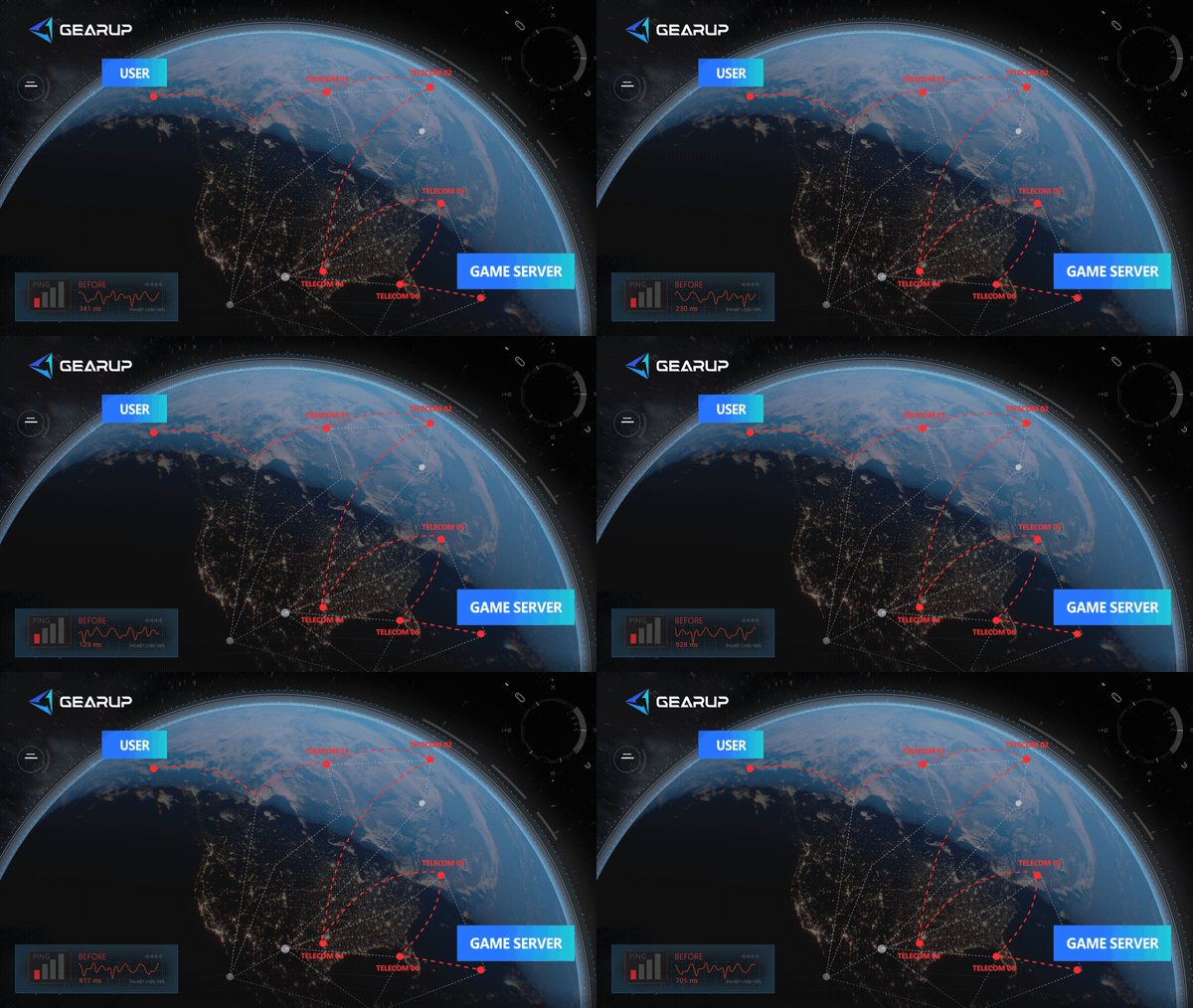
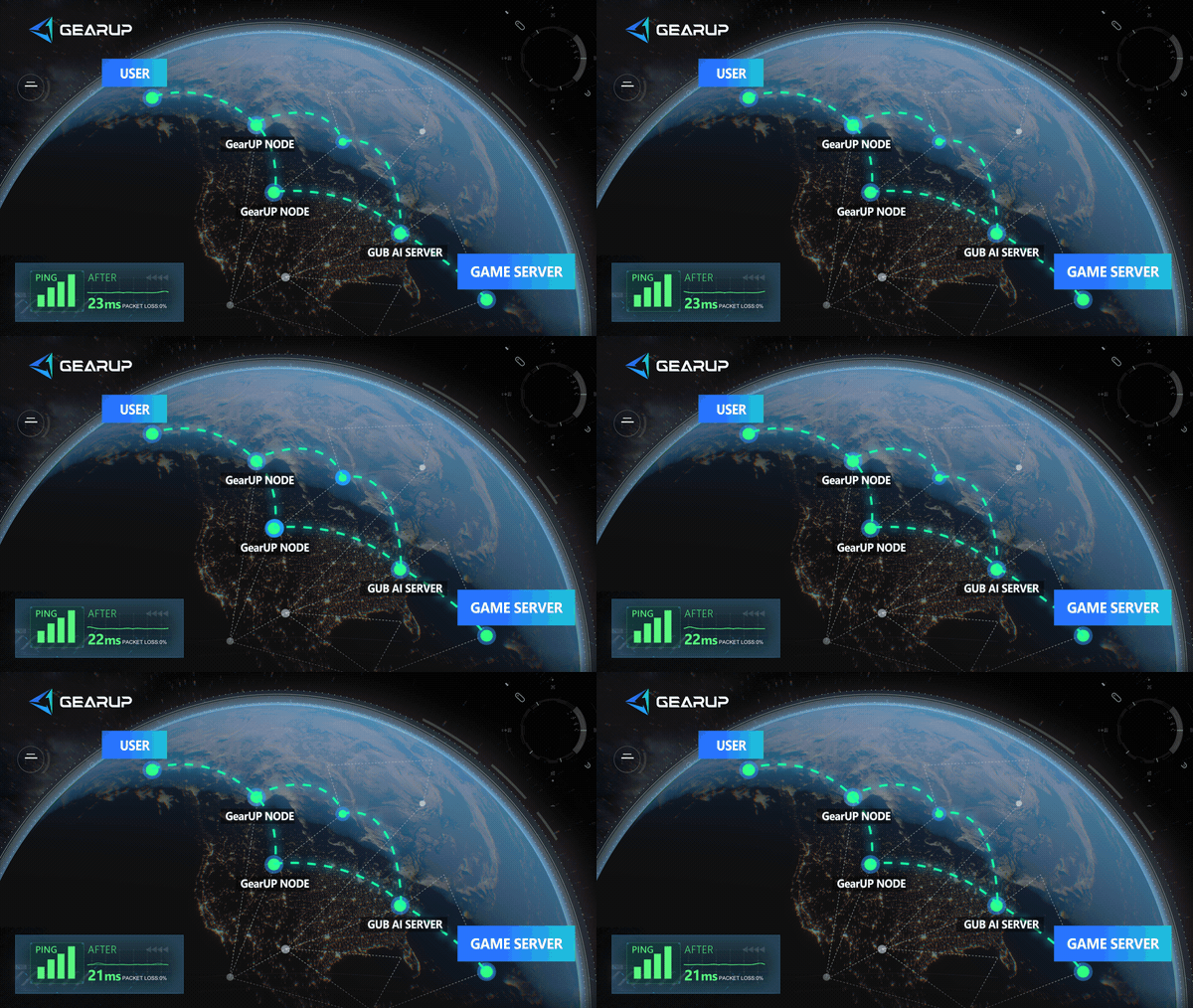
Methods to Fix Marathon Lag on Xbox and PlayStation
Use a Stable Local Connection
A wired connection is the most effective and reliable; although it is not as convenient as Wi‑Fi, it is stable, has faster transmission speeds, and is less susceptible to interference.
But if you must use Wi‑Fi, choose the frequency band that is more suitable for your actual situation:
| Aspect | 2.4 GHz | 5 GHz / 6 GHz (e.g. Wi‑Fi 5 / Wi‑Fi 6E) | Best for (game scenarios) |
|---|---|---|---|
| Range | Longer range, better coverage | Shorter range, more limited coverage | 2.4 GHz when console is far from the router |
| Penetration through walls/obstacles | Better (passes walls easier) | Weaker (more easily blocked) | 2.4 GHz for different rooms or multiple floors |
| Congestion / interference | More congested (many neighbors, Bluetooth, IoT) | Less congested (especially 6 GHz) | 5/6 GHz when nearby networks cause interference |
| Latency & stability | Can have higher jitter when congested | Generally lower latency and more stable at close range | 5/6 GHz for competitive or real‑time gaming |
| Best practice tip | Use for coverage and reliability | Use for low-latency, high-performance local play | Prefer wired Ethernet; otherwise choose 5/6 GHz for close-range play, 2.4 GHz for coverage needs |
Quick recommendation: wired Ethernet is best; if using Wi‑Fi, pick 5 GHz/6 GHz for low-latency/close-range gaming and 2.4 GHz when you need better range or wall penetration.
Fix Server Connections with HYPEREV
Next is the most critical issue: network nodes. Marathon’s game data passes through numerous nodes before being transmitted to the game servers, so the stability of those nodes and the routes they form is crucial. If they fail, you need HYPEREV to make adjustments.
The benefit of this game router is that it provides precise optimization for all Marathon servers worldwide and is a one‑click operation; unlike traditional routers that require complex network configuration, HYPEREV acts like an intelligent network guide, constantly ensuring low ping and a stable Marathon gaming experience.
Close Programs and Devices
Many players may have PlayStation or Xbox automatic updates and game downloads enabled; background silent downloads are not easy to notice, but they will continuously consume your network bandwidth and cause Marathon's latency to rise. Likewise, if you have other devices connected to the same network, they can also produce this result. So close those unnecessary programs and devices and do not download or update during gameplay, so you can ensure your Tau Ceti IV colony adventure is not affected.
So could Marathon's latency possibly be a performance issue?
This possibility is very low. First, the Marathon console version only supports PlayStation 5 and Xbox Series X/S, and unlike PC it does not need to accommodate a wide range of hardware. Second, the optimization work for this release is very good and the console adaptation is solid; even on the lower‑performance Xbox Series S it can run smoothly at reduced graphics. Besides, even if there were performance issues, you would not be able to make any adjustments.
Overall, the latency issues in the Marathon console version mainly originate from network problems—whether from the local network or the public routes connecting to the servers. By making local adjustments and using HYPEREV to optimize nodes, you can minimize latency and improve stability. For console players, complex network adjustments are difficult to carry out, so making reasonable use of effective tools is the wisest choice.
About The Author
Lucas Harrison is GearUP’s PC game expert and a veteran media professional with many years of experience. He is well versed in the various network issues that affect PC games and has extensive insights into solving them, having proposed numerous suggestions for optimizing GearUP’s PC version. He currently serves as GearUP’s Content Creation Lead, primarily responsible for writing GearUP’s PC network optimization guides, which aim to help players understand the problems they’re facing and provide practical, effective solutions through clear, easy-to-follow guidance.
The End