How to Fix Marathon Console Server Connection Issues
 Last updated: 2 Mar, 2026
  5 min
5 minSince the Beta test began, Marathon has attracted attention from players worldwide. Although this is Bungie's first attempt at moving away from shooter-style gameplay, everyone still has high expectations for this long-established game developer.
Marathon supports cross‑platform matchmaking, which means console players will share servers with PC players. While this expands the matchmaking pool and the scope of competition, it also places greater strain on the servers. Many players have encountered various server connection issues, and often what prevents you from escaping the Tau Ceti IV colony unscathed is not your opponents but losing connection to Marathon’s servers.
Connection Issues Faced by Marathon Console Players
Since the beta test that began in February 2026, Bungie has been testing and adjusting the following aspects of server performance:
- Stability under server load
- Cross-platform synchronization
- Reliability of the matchmaking system
- Backend infrastructure verification
Although the console version of Marathon uses the same server setup as the PC version, many players have still reported encountering:
- Getting stuck on the "connecting to server" screen
- Finding a match but being unable to enter the game
- Disconnecting mid-match
- Sudden spikes in latency
These faults are all intermittent, and because of the closed nature of the PlayStation and Xbox systems, they are difficult to diagnose and adjust.
Why Does Marathon on Consoles Fail to Connect?
Failing to connect to Marathon’s servers doesn’t necessarily mean the servers are down, but the closed nature of console systems makes it hard to pinpoint the problem. Generally, we consider the following types:
- Strict NATs / carrier‑grade NAT: Many consoles sit behind restrictive NATs that increase latency, cause packet loss, or block UDP handshakes needed for stable connections.
- Wi‑Fi and consumer network gear: Consoles are often on Wi‑Fi or behind low‑end routers with poor QoS, causing higher jitter and disconnects compared to wired PC setups.
- Cross‑platform servers and load: Sharing servers with PC players increases server load and mixes differing latency profiles, raising timeouts and reconnect events.
- Limited networking control on consoles: Closed OS and few user controls (no easy port forwarding/MTU/QoS tweaks) make it harder to fix or mitigate intermittent network issues.
Direct Ways to Resolve Marathon Console Server Connection Problems
A major difficulty with console network connection issues is that there are almost no “network settings” to adjust or test; you cannot accurately diagnose where the problem lies, nor can you intervene in the connection and selection of public network nodes. But you can use HYPEREV — a fully automated game network optimization hardware device, i.e., a gaming router.
You may wonder what the difference is between HYPEREV and a conventional esports router. I can tell you very simply:
- Optimized specifically for each game / each server
- Only handles game traffic, without affecting other software and devices
- Plug, no complicated setup, easily controlled via a mobile app
- Supports all major console devices
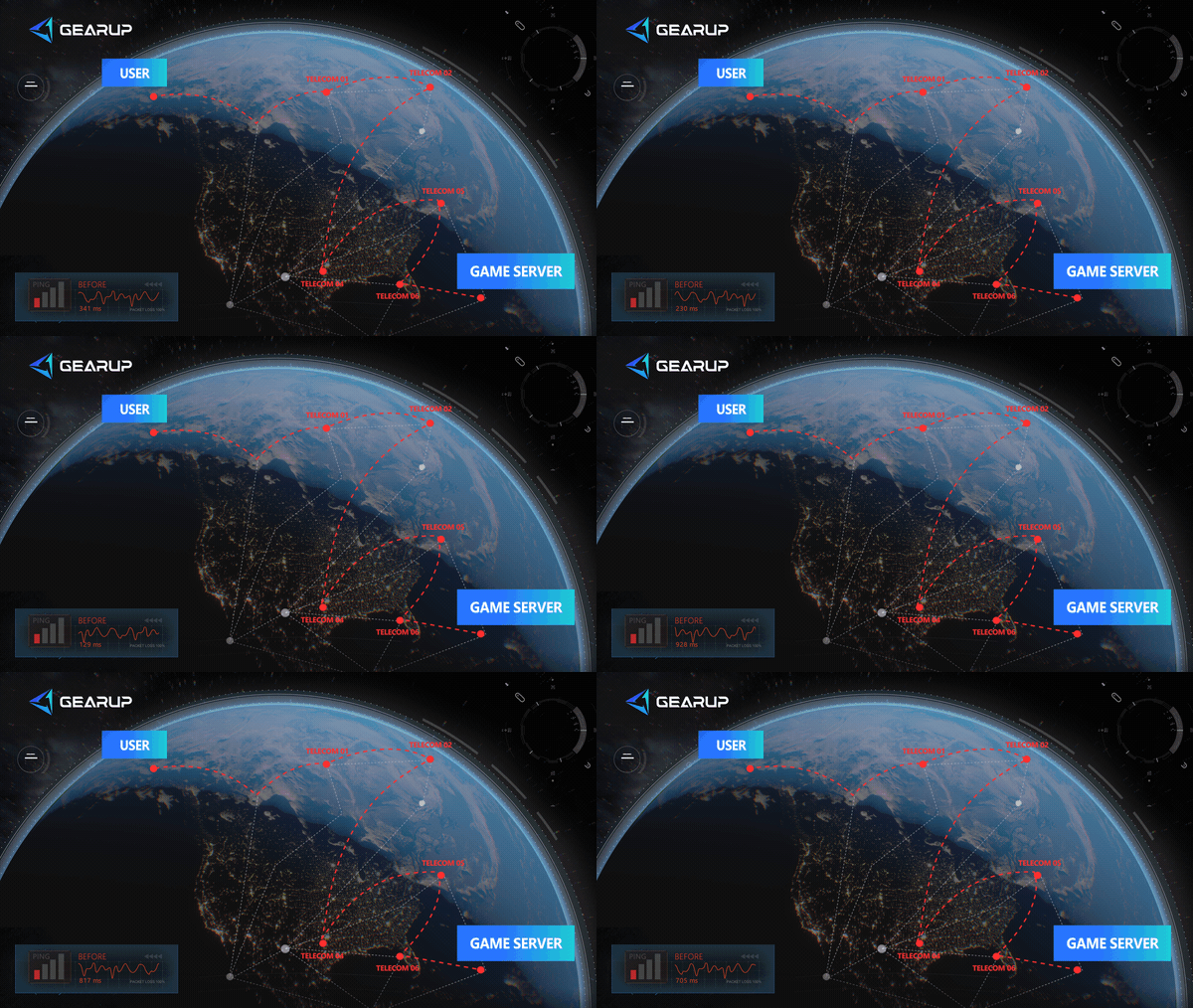
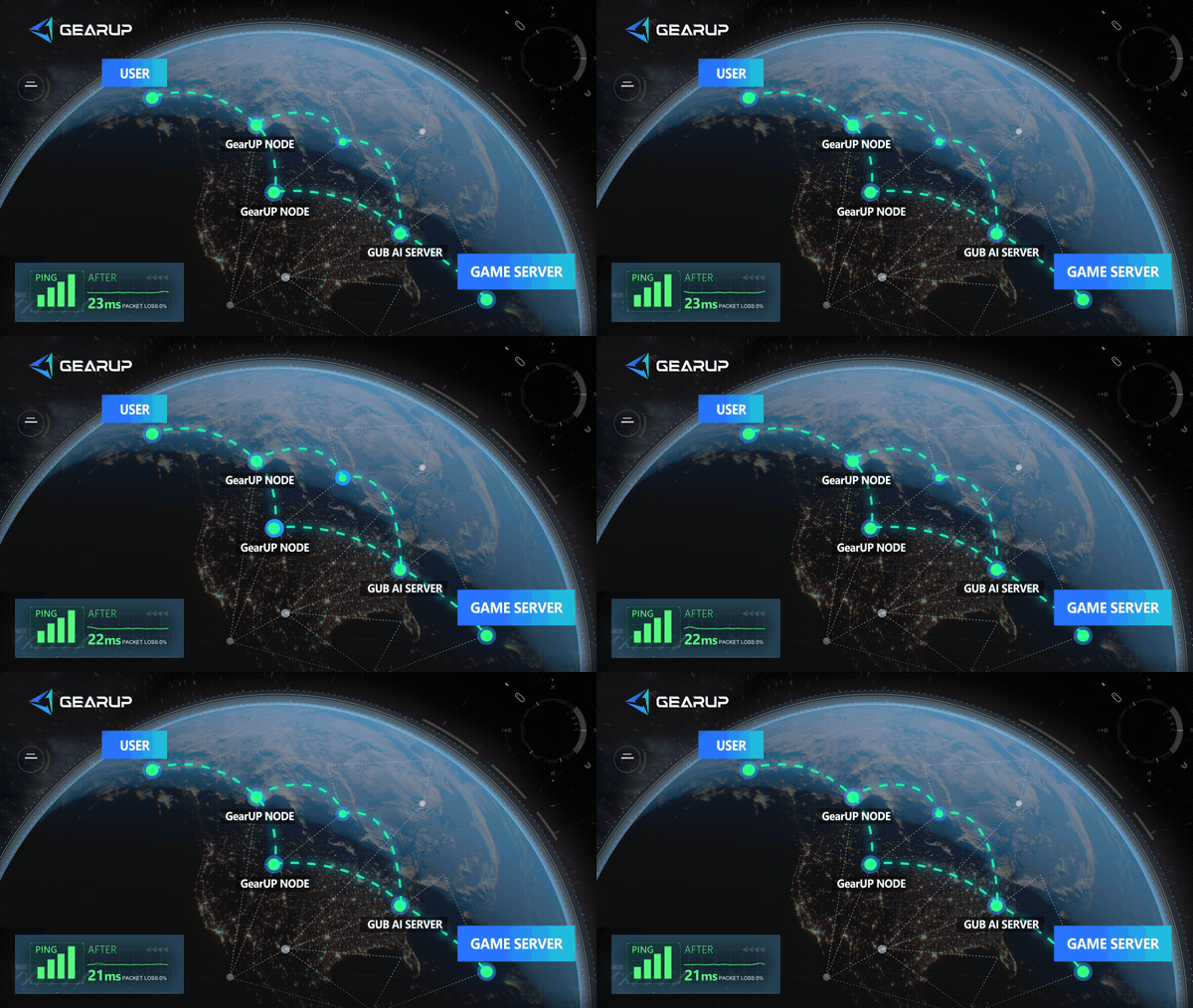
HYPEREV improves connection stability by adjusting network nodes, i.e., your data transmission routes; as long as the Marathon servers are not down, your connection performance can be noticeably improved. Below is an introductory video about HYPEREV, and you can also click the button to go to the store to learn more.
What Else Can You Pay Attention to and Prepare?
- Use a wired connection whenever possible, because Wi‑Fi is more easily affected by interference. If you have multiple devices connected to Wi‑Fi at the same time, they may also contend for channel bandwidth.
- Restart your router when necessary, especially some high‑end gaming routers, which may have temporary network states or caches from your settings that can affect Marathon connections.
- Do not use VPN plugins or change DNS—first, because they are unlikely to produce significant and stable effects, and second, because they may cause other network errors. It is recommended to follow HYPEREV’s or GearUP’s guidance for optimization.
Marathon Console Server Connection FAQ
Q1. Are the servers for Marathon’s console and PC versions located in the same places?
Yes. We recommend connecting to the servers that are closer to you. You can view each server’s real‑time ping in the GearUP Router App.
Q2. Will increasing my internet speed reduce server connection issues?
No. Whether a server is down or connection nodes are poor, increasing bandwidth does not fix these issues because they are not directly related to internet speed.
Q3. Why can’t using a VPN or changing DNS solve it?
Simply put, those methods only switch you to some general-purpose nodes and network interfaces, which are not specifically set up for Marathon, so they aren’t optimal. And because of the closed nature of PlayStation and Xbox systems, using a one‑click tool like HYPEREV is the safest and fastest solution.
Conclusion
If your PlayStation and Xbox are consistently unable to connect smoothly to the Marathon servers and you don't know how to fix it, then you might try HYPEREV — a one‑click tool that can optimize the network. Compared with traditional routers, it can deliver more precisely targeted game network optimization, putting your console's network under your control, reducing latency and enabling smoother gameplay.
About The Author
Lucas Harrison is GearUP’s PC game expert and a veteran media professional with many years of experience. He is well versed in the various network issues that affect PC games and has extensive insights into solving them, having proposed numerous suggestions for optimizing GearUP’s PC version. He currently serves as GearUP’s Content Creation Lead, primarily responsible for writing GearUP’s PC network optimization guides, which aim to help players understand the problems they’re facing and provide practical, effective solutions through clear, easy-to-follow guidance.
The End