Not All PUBG Mobile Lag Is The Same, Find the Root Cause and Fix It
 Last updated: 28 Jul, 2026
  5 min
5 minThe word "lag" gets used for at least three completely different problems in PUBG Mobile, and most guides treat them as one. That is why players who follow the same advice keep getting inconsistent results. A player who feels late to every peek and a player whose enemies teleport across a hallway are not experiencing the same thing, even if they both call it lag.
If you want the fix to actually work, the first step is figuring out which flavor of lag you have.
## Quickly Diagnose the Cause of PUBGM Latency
A constant delay between your input and the action appearing on screen is high latency.
For example, you press fire and the shot registers a moment later. The delay feels consistent and does not change much during the match. In PUBG Mobile, this usually means you are connected to a distant server or your ISP is using a longer route to reach the game server.
A delay that keeps changing is jitter.
If your ping jumps from 40 ms to 180 ms and then drops back within seconds, you are likely dealing with jitter. This often feels worse than a stable high ping because the game cannot maintain a consistent connection. A stable 90 ms connection can feel better than one that constantly jumps between 40 ms and 160 ms.
Missing or delayed data is usually packet loss.
Typical signs include skipped footsteps, players suddenly moving or teleporting, and shots that appear to fire but do not register damage. Packet loss is especially disruptive because some game data never reaches the server or your device.
If you are not sure which issue you have, check your ping behavior during a fight:
- Ping stays high but stable: likely high latency.
- Ping constantly jumps up and down: likely jitter.
- Characters freeze, teleport, or actions fail to register: likely packet loss.
Before Touching The Network, Rule Out The Phone
A frame rate drop can feel very similar to network lag.
Your ping may stay at a perfect 30 ms, but the game can still feel unstable if your phone is overheating and reducing performance. This is one of the first things worth checking, because network optimization cannot fix performance throttling caused by the device.
Set the frame rate to a level your phone can maintain consistently. A stable 60 FPS usually feels smoother than a higher "smooth extreme" setting that constantly drops during gameplay.
Avoid using thick phone cases during ranked matches, especially in a warm environment. Charging while playing is another common cause of overheating and thermal throttling. Try to charge between matches instead of during gameplay. If your phone already feels hot before the match starts, let it cool down first.
Storage space can also affect performance. PUBG Mobile relies on background asset loading, and devices with very limited free space are more likely to experience mid-match stutters. Keeping enough free storage can help prevent these freezes from being mistaken for jitter.
Fixing The Network Side
Once your device is no longer the bottleneck, the next thing to check is how your connection reaches the game server.
Mobile connections do not always follow one stable path. Your phone may switch between Wi-Fi and cellular networks, move between access points, and rely on ISP routes that are designed for general internet traffic rather than real-time gaming.
This means a good speed test result does not always guarantee a good PUBG Mobile experience. Your download speed may look fine while the route to the game server still causes unstable latency or packet loss.
Before using any additional tools, try these steps first:
- Use 5 GHz Wi-Fi when you are close to the router. Switch to 2.4 GHz Wi-Fi when distance or walls weaken the signal.
- Stay on the same network during a match. Switching between Wi-Fi and cellular data can cause sudden latency changes.
- Close background activities such as cloud photo backup, screen recording, and system updates before ranked matches.
If the connection is still unstable after these checks, the issue may come from the route between your ISP and the game server.
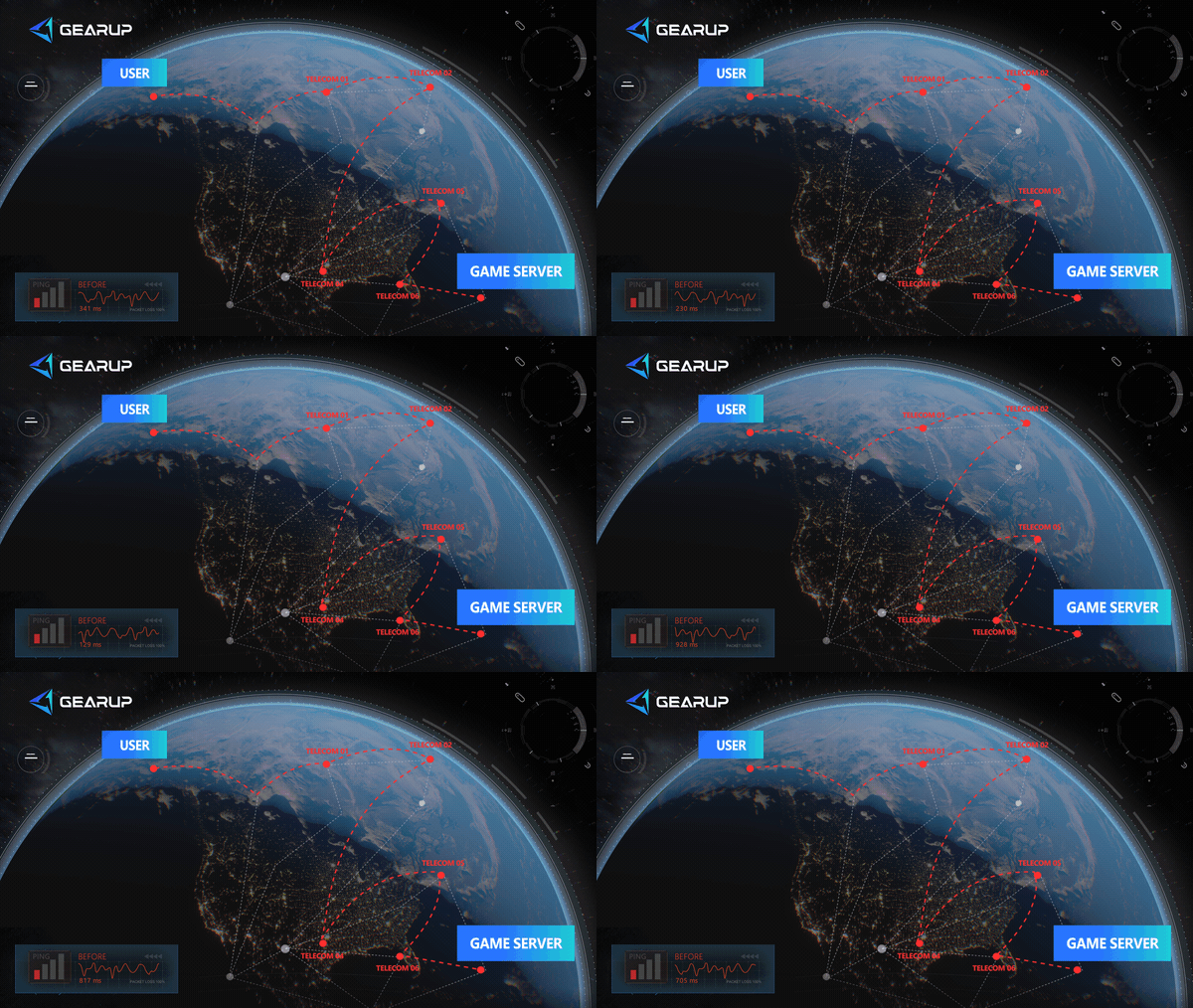
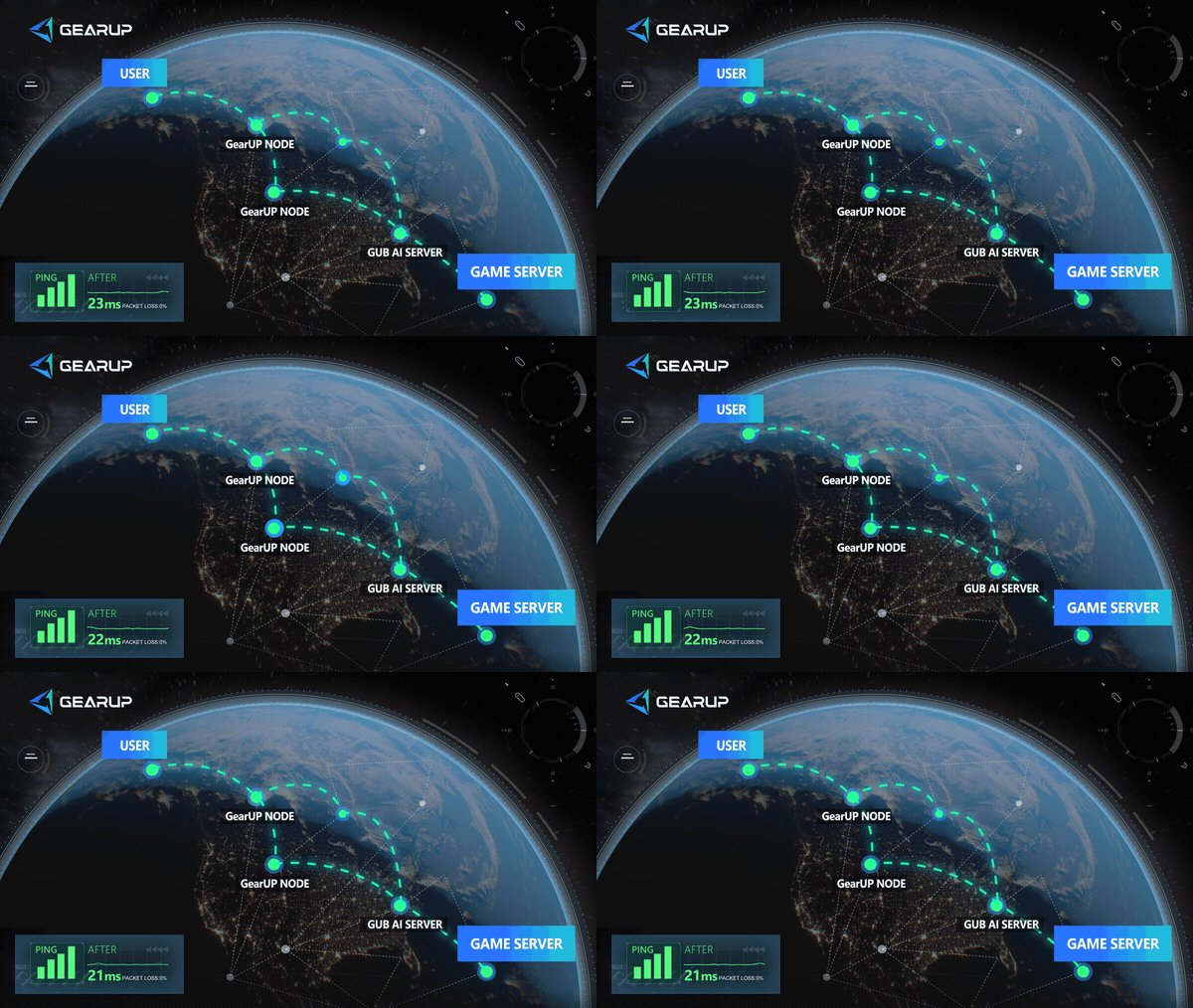
In this situation, network optimization tools such as GearUP Mobile may help improve routing stability. Its dual-channel technology can use both Wi-Fi and cellular connections to help maintain a more stable connection path when one network becomes unstable.
Which Server Should You Actually Pick?
The server region you choose has a direct impact on your ping. A server that is physically closer usually means a shorter connection route and lower latency.
As a general rule, choose the closest server region that still has enough players for your game mode. Selecting a distant region for better matchmaking or to play with friends can add significant delay, and there is no network setting that can completely remove the extra distance.
If you have to play on a different region, focus on connection stability rather than only the ping number. A stable connection with slightly higher latency usually feels better than an unstable route with frequent spikes.
Is Lower Ping Always Better?
Ping is an important indicator, but it is not the only factor that determines your actual gameplay experience.
A lower ping number does not always mean a smoother match. A stable 80 ms connection can feel better than an unstable 40 ms connection with frequent spikes or packet loss.
If you are connecting to a server that is far away from your location, a higher ping is expected. The physical distance between you and the server creates unavoidable delay, and no setting can completely remove that extra latency.
Instead of chasing the lowest possible ping, pay attention to how the game actually feels. Stable aiming, consistent hit registration, and smooth movement are often better signs of a good connection than the ping number alone.
About The Author
Olivia Clarke is a Mobile Gaming Content Editor at GearUP, focusing on competitive mobile games and the networking challenges that affect online gameplay. She specializes in creating practical, easy-to-follow content for titles like PUBG Mobile and Brawl Stars, helping players understand the causes of lag, unstable connections, and high latency. By combining real gameplay scenarios with straightforward networking advice, Olivia makes technical topics more accessible to mobile gamers.
The End