PUBG Mobile: How to Fix High Ping without Losing the Fight
 Last updated: 6 Nov, 2025
  5 min
5 minPUBG Mobile lives on millisecond decisions—shoulder-peeking a corner in Pochinki, beaming a car speeding past School, stealing the final circle with a last-second prone. When the ping number creeps up, those moments feel like you’re shooting through jelly. Bullets land late, doors hesitate, and the "peeker’s advantage" becomes a cliff. The good news: most high-ping pain comes from distance and messy routing, both of which you can tame with smart setup and a better path to the game’s servers.
What Does High Ping in PUBG Mobile Mean?
High ping refers to the delay between your device and the PUBG Mobile server. In-game, it causes delayed reactions, rubber-banding (jerky movement), and shots that register late—like getting hit after you’ve already taken cover.
But ping instability (jitter) is just as damaging. When your ping fluctuates wildly, it disrupts muscle memory and timing, making recoil control and peek battles unpredictable. Even a low average ping (e.g., 40ms) feels terrible if it spikes randomly.
PUBG Mobile’s in-game ping meter acts like a heartbeat monitor:
- Green & steady (60–80ms): Smooth gameplay.
- Yellow (100–200ms): Playable but risky.
- Red (200ms+): Avoid fights—or fix your connection before queuing Ranked.
Pro tip: Consistency beats raw numbers. A stable 80ms is better than a jumpy 40ms. If your ping spikes in the lobby, troubleshoot before dropping into Erangel.
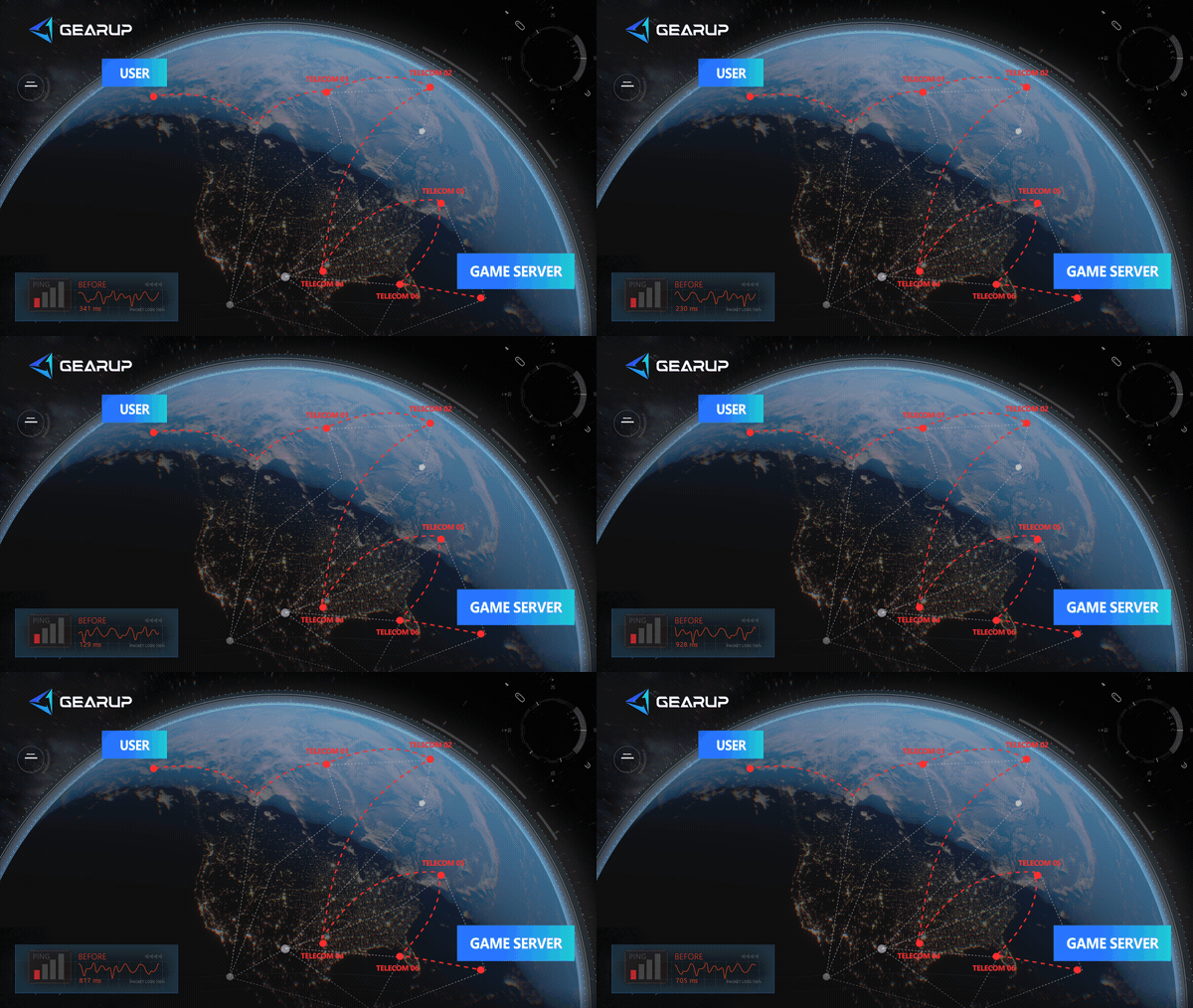

What Causes High Ping in PUBG Mobile?
In fact, experiencing high ping while gaming on mobile devices is a very common phenomenon, as there are more factors that can affect latency. Below are some common reasons—you can refer to them and troubleshoot accordingly:
- Poor Server Routing: Connecting to distant or overloaded game servers increases latency. If your ISP routes traffic through inefficient paths, your ping spikes.
- Unstable Wi-Fi or Mobile Data: Wi-Fi interference (walls, other devices) weakens signal strength, increasing ping. Mobile data fluctuations (4G/5G signal drops) cause sudden lag spikes.
- Background Apps Eating Bandwidth: Downloads, streaming, or updates running in the background steal bandwidth. Apps like YouTube or cloud sync services can silently increase ping.
- Server Overload: Too many players online (e.g., after a new update or during events) can overload servers. High server load = slower response times, even if your own connection is good.
- Device Performance Issues: Old phones or overheating devices struggle to process game data quickly. Low RAM or CPU throttling can add extra delay on top of network lag.
How to Reduce Ping in PUBG Mobile: Effective Solutions
Use GearUP Mobile to Reduce Ping
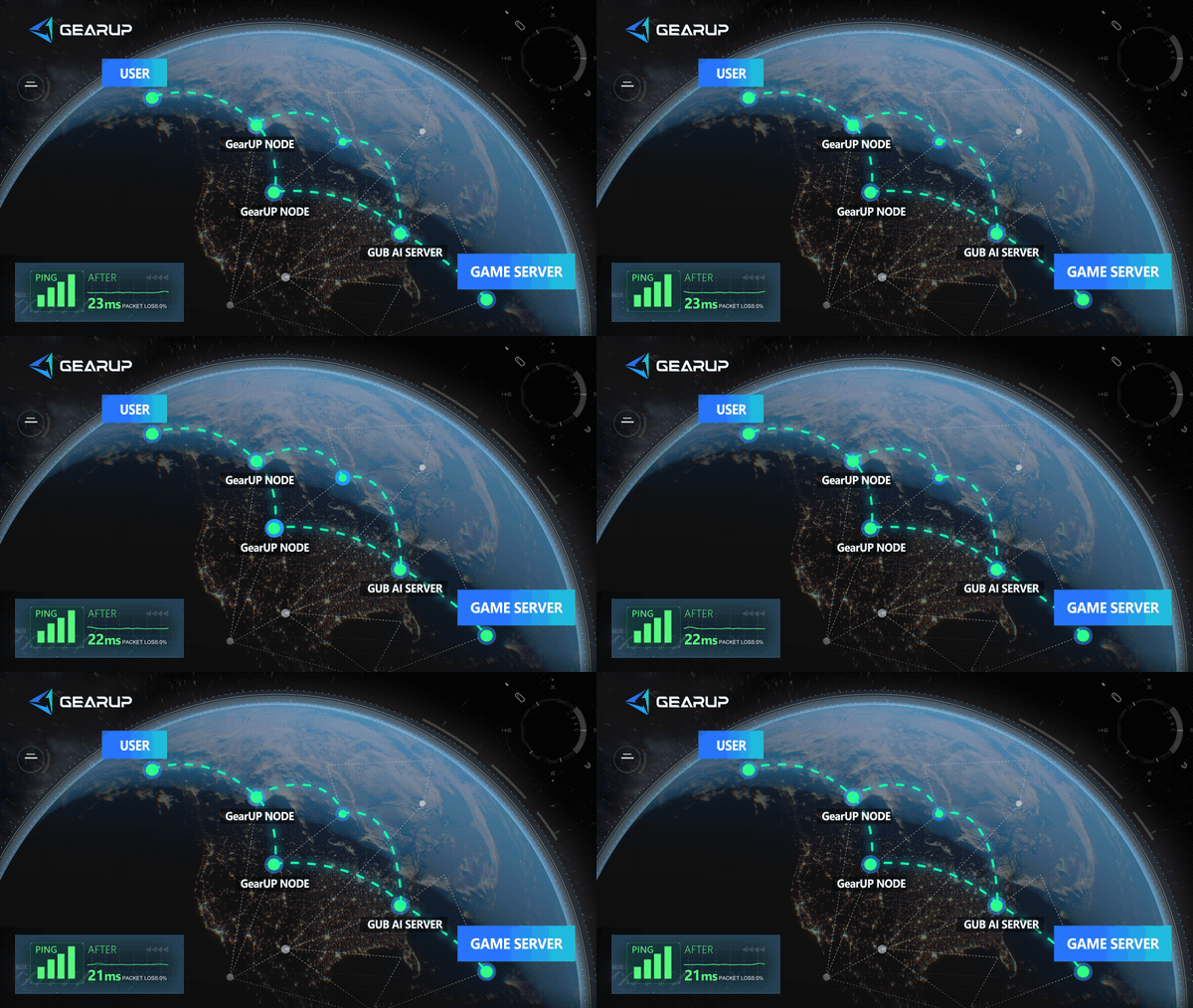
The above preparations cannot completely help you avoid high ping, because your connection signal may still fluctuate, your network nodes may be subject to many interferences and are not optimal. This is where GearUP Mobile comes in—it uses advanced dual-channel technology, which automatically allocates resources based on the strength of WiFi and mobile signals, allowing the combination of both to achieve the most stable and high-speed connection effect.
At the same time, it adapts the best route through global server nodes, reducing network throttling caused by weak signals and allowing data to be transmitted with the highest efficiency, thereby lowering PUBG Mobile's ping. You can scan the QR code below or click here to download GearUP Mobile.
Step 1: Search for PUBG Mobile and click ‘Boost’.
Step 2: You’ll see real-time ping changes and optimization effects, then tap ‘Open Game’.
Ensure Your Connection Is Stable
Begin with the basics that actually move the needle. If you’re on Wi-Fi, use 5 GHz (or Wi-Fi 6/6E) instead of 2.4 GHz and play within a room or two of the router. If your building’s Wi-Fi is noisy, switch to a clearer channel or sit closer; fewer walls equals fewer drops.
Mobile data can work if the signal is stable, but avoid playing while moving between cells (train/car rides are ping roulette). If you must play on data, pick a spot with a strong, consistent signal and keep the phone cool so the modem isn’t thermal-throttling mid-fight.
Choose Right PUBG Server Region
Physical distance is one of the key factors causing high ping, because data transmission takes time, and the longer the transmission distance, the greater the potential jitter impact. Therefore, shortening your distance to the server can effectively reduce ping.
Because matchmaking is region-based in practice, playing on a far-away region is asking for trouble. If you installed a client variant for another market (KRJP/VN/TW), make sure the region you actually match on is close to where you live.
If you are unsure which server is more suitable, you can test the ping to the server through GearUP Mobile to decide.
Close Background Apps
Whether you're using iOS or Android, performance and network usage by background processes are almost unavoidable—even if they run in low-power mode. We still recommend closing all non-essential apps, especially:
- streaming services
- live broadcasts
- chat apps
- ny software requiring continuous data transfer
Quick Symptom Decoder for PUBGM Ping
- If the lobby ping is high and stays high in match, the region is far or the route is long—change to your nearest region and use GearUP to stabilize it.
- If the lobby ping is fine but spikes during circles or hot drops, local Wi-Fi is the culprit—sit closer to the router or switch to clean 5 GHz.
- If numbers wobble every 10–20 seconds, that’s jitter—close background tasks and pick a steadier GearUP node.
- If you see 0.1–0.5 s freezes with footsteps skipping, that’s packet loss—dual-channel and Anti-Packet-Loss help here, and Ethernet-to-router plus Wi-Fi offloads for other devices keep the airwaves calm.
Conclusion
High ping turns every peek into a gamble, but it isn’t a mystery. Play on the closest region, keep your local network quiet and modern, and hand the heavy lifting to GearUP Mobile so your traffic takes the best path—complete with adaptive routing, anti-packet-loss, and dual-channel steadiness. Do two or three test matches on one setup, keep what feels smoothest, and stick with it for the night. When the next final circle plays out without a single stutter, you’ll know the road is finally on your side.
About The Author
Ethan is one of GearUP's Technical Blog Editors, specializing in gaming network optimization and troubleshooting. With an in-depth understanding of GearUP's technologies, he creates clear, practical content that helps players identify the causes of network issues, understand how game acceleration works, and optimize their online gaming experience. By turning complex technical concepts into easy-to-follow guides, Ethan helps readers solve common connectivity problems and make better use of GearUP's features.
The End