How to Fix Lag in Minecraft on Console
 Last updated: 9 May, 2026
  6 min
6 minMinecraft does not look like a game that should feel ruined by latency. It is blocks, menus, mobs, and simple movement on the surface. But the second you play online with friends, join a Realm, or hop into a busy Bedrock server, delay starts showing up in ways that get annoying fast.
A block breaks late. A chest opens half a second after you press the button. You rubber-band while sprinting, or the world feels weirdly sticky when combat starts. Even if you're playing on the PlayStation, Xbox, or even the Nintendo Switch version, latency can still occur. But is Minecraft's latency unsolvable? We don't think so.
>GearUP router plugin discussion group: https://t.me/+2L3_m7xt6ToyNWQ0
Why Does Minecraft Console Edition Also Have Latency?
Many players choose to play Minecraft on consoles because it's simple and convenient, and you don’t have to worry about system configuration or performance. However, don’t assume this will prevent latency issues. In fact, playing on a console can lead to more unexpected problems.
It manifests as:
- Character movement lag or rubberbanding
- Slower scene loading
- Severe stuttering or even disconnections
The reason is simple:
- Your internet is slow or unstable. A weak Wi-Fi signal or low speed means the game can't send and receive data fast enough.
- The server is far away. Data takes longer to travel over greater distances, so a server in another country will always feel slower.
- The server is overloaded. Too many players or weak server hardware causes lag for everyone, regardless of your own internet speed.
Can Minecraft Console Latency Be Solved?
Of course. You need to use the right methods, especially optimizing the routing nodes — that is, the network paths involved in connection issues. Below, let’s take a detailed look at the specific solutions:
Optimizing Network Nodes with GearUP Router
The most critical issue is the routing nodes. Simply put, when Minecraft’s game data is transmitted from your device to the game server, it must pass through a large number of intermediary nodes. The route formed by these nodes is the key factor affecting latency. If the route is not optimal, for example because it detours or encounters network jitter, game latency will increase.
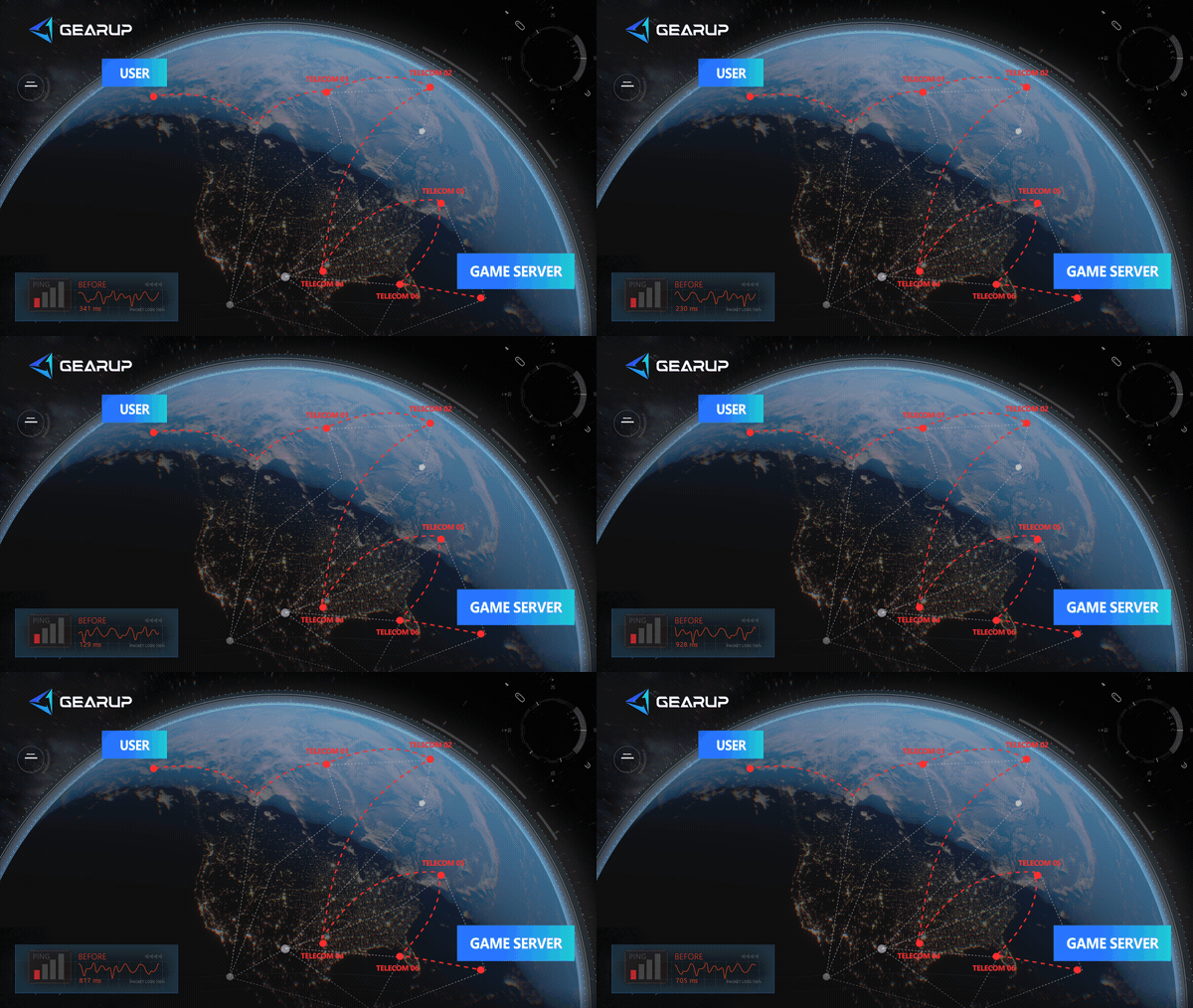
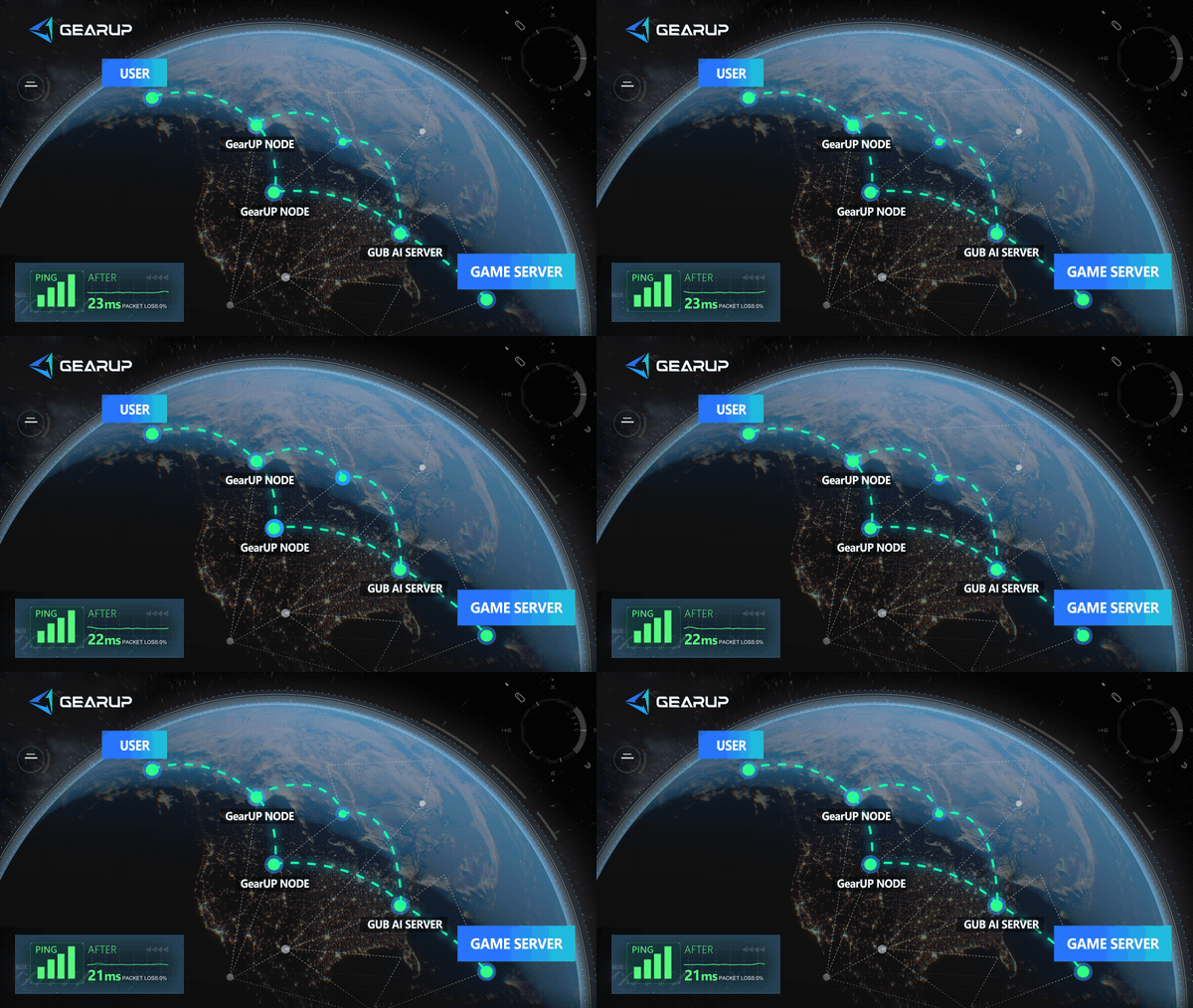
GearUP’s HYPEREV is an excellent tool for optimizing nodes. It requires no complicated setup: connect it to your home’s main router and you can start using it immediately. Via a mobile app you can complete node optimization with one tap, and it continuously provides network protection. Its proprietary intelligent traffic analysis and node switching technology can constantly ensure a stable Minecraft connection:
But maybe you do not want to purchase additional hardware. If you are using a GearUP partner router, such as Asus or ZTE, you can install the GearUP plugin directly on the router to achieve the same optimization features. Currently, the GearUP router plugin is available on multiple brands and models, and it will be extended to more in the future:
You can also join the GearUP router plugin discussion group: https://t.me/+2L3_m7xt6ToyNWQ0
Stabilize Your Network Connection
Local network is something many players easily overlook — it’s the origin of the data. If there are problems there, all subsequent optimizations are meaningless. You need to ensure your local network is stable enough, since Minecraft’s multiplayer is highly susceptible to jitter.
- First, if conditions allow, use a wired connection whenever possible. If you play the Nintendo Switch version, it’s also recommended to place it in the dock and connect via Ethernet. If you must use Wi‑Fi, connect to the band that is more stable in your situation rather than blindly choosing the 5 GHz band.
- Many players enable automatic game updates, pre-downloads, or automatic cloud sync—especially on PlayStation and Xbox. We recommend disabling these features while you’re playing, as they can consume large amounts of bandwidth and are one of the reasons Minecraft latency fluctuates.
Do Not Use VPNs or Proxies
This may surprise many players, but VPNs do not actually help reduce latency. VPNs are designed to change IP addresses and encrypt data, so they often route traffic through detour nodes and do not consider the physical location of the host or server you’re connecting to. As a result, many players find latency increases after using a VPN.
The same applies to various proxies: they are not focused on gaming the way GearUP’s services are. After changing your network settings, you may not only face higher latency but also connection failures, error messages, and even the risk of being banned.
Why Can't Traditional Routers Solve Minecraft Latency?
A router only controls what happens inside your home. Think of it like your front door. It decides how fast you leave the house, but it can't control the traffic on the road outside. Once your game data leaves your router, it travels across many networks before reaching the Minecraft server. A gaming router has zero control over that journey.
Gaming routers prioritize traffic, not routes. A fancy gaming router can give Minecraft data priority over other devices in your home, like your phone or smart TV. But that only helps if the problem is inside your home. If the lag is caused by a bad path between you and the server across the internet, no amount of local prioritization fixes it.
The GearUP plugin works beyond your home. It optimizes the actual path your data takes across the internet, selecting faster, more stable nodes and avoiding congested routes. This is something no router hardware can do on its own. That's why even the most expensive gaming router still needs the GearUP plugin to truly reduce lag in Minecraft online.
Minecraft Console Lag FAQ
Q1: Isn't Minecraft's online mode P2P?
If you are connecting to official servers or other large third‑party servers, it is not P2P — game data needs to be transmitted from your device to the server.
Q2: Why does my latency fluctuate repeatedly?
This usually indicates other programs or devices are consuming network bandwidth. Check the background activity on your PlayStation and Xbox.
Q3: If I already have a router that supports the GearUP plugin, do I still need HYPEREV?
No. Either one can use GearUP’s network optimization features. HYPEREV exists so players without a supported router model can get the same benefits without replacing their router.
Q4: Why is there no latency on PlayStation but there is on Xbox?
That normally should not happen. If it does, check whether both consoles are on the same network, whether the Xbox is updating or downloading in the background, or whether the router has restrictions applied to the Xbox.
Conclusion
When playing the console version of Minecraft, latency can occur at any time, and because consoles are closed systems, many players don't know how to fix it. In fact, by using one-click optimization tools like HYPEREV or the GearUP router plugin, you don't need to change any console settings; you can easily optimize your network and reduce latency. Don't let network problems bother you, try it now.
About The Author
Lucas Harrison is GearUP’s PC game expert and a veteran media professional with many years of experience. He is well versed in the various network issues that affect PC games and has extensive insights into solving them, having proposed numerous suggestions for optimizing GearUP’s PC version. He currently serves as GearUP’s Content Creation Lead, primarily responsible for writing GearUP’s PC network optimization guides, which aim to help players understand the problems they’re facing and provide practical, effective solutions through clear, easy-to-follow guidance.
The End