How to Lower Ping in CrossFire Legends
 Last updated: 6 Jan, 2026
  4 min
4 minIf you play CrossFire Legends, you probably experienced this already. You peek first, you shoot first, but somehow you still die first. Then you look at the ping indicator and see 100ms, 120ms, sometimes even higher. At that point, it’s not your aim anymore. It’s the connection.
I’ve played CrossFire Legends on different networks and regions, and one thing is very clear: most ping problems are not caused by your phone, and not even by your internet speed. It’s usually about routing.
Below is a full breakdown on how to actually reduce ping, starting from free methods, then moving into more advanced solutions.
Ping is Not Internet Speed
A lot of players think that if their Wi-Fi is fast, the ping should be low. That’s not how it works.
Ping is the time it takes for data to travel from your phone to the game server, and then come back. Download speed only measures how much data you can pull, not how fast small packets travel.
So yes, you can watch 4K videos smoothly and still lag badly in CrossFire Legends. Mobile FPS games are very sensitive to packet loss, unstable routing, and server distance. Even small delay can be felt in gunfights.
Basic Fixes that Help
First, always use stable Wi‑Fi if possible. 4G and 5G may look fast, but mobile networks change routes constantly. During peak hours congestion is common and causes random ping spikes.
If your router supports 5GHz Wi‑Fi, use it. It has less interference and usually better latency than 2.4GHz — just don’t stay too far from the router.
Close background apps. This sounds basic but many people ignore it. Cloud sync, app updates and social media refresh all steal small packets; FPS games suffer from that.
Server Selection Mistakes Players Often Make
CrossFire Legends doesn’t always connect you to the best server automatically. Some players pick foreign servers thinking matchmaking is faster or opponents are stronger; others follow friends in different regions. This almost always increases ping. The best choice is the physically closest server. A faster queue is not worth high latency — lower ping gives better hit registration and reaction advantage.
Why Ping is Still High after Doing Everything Right?
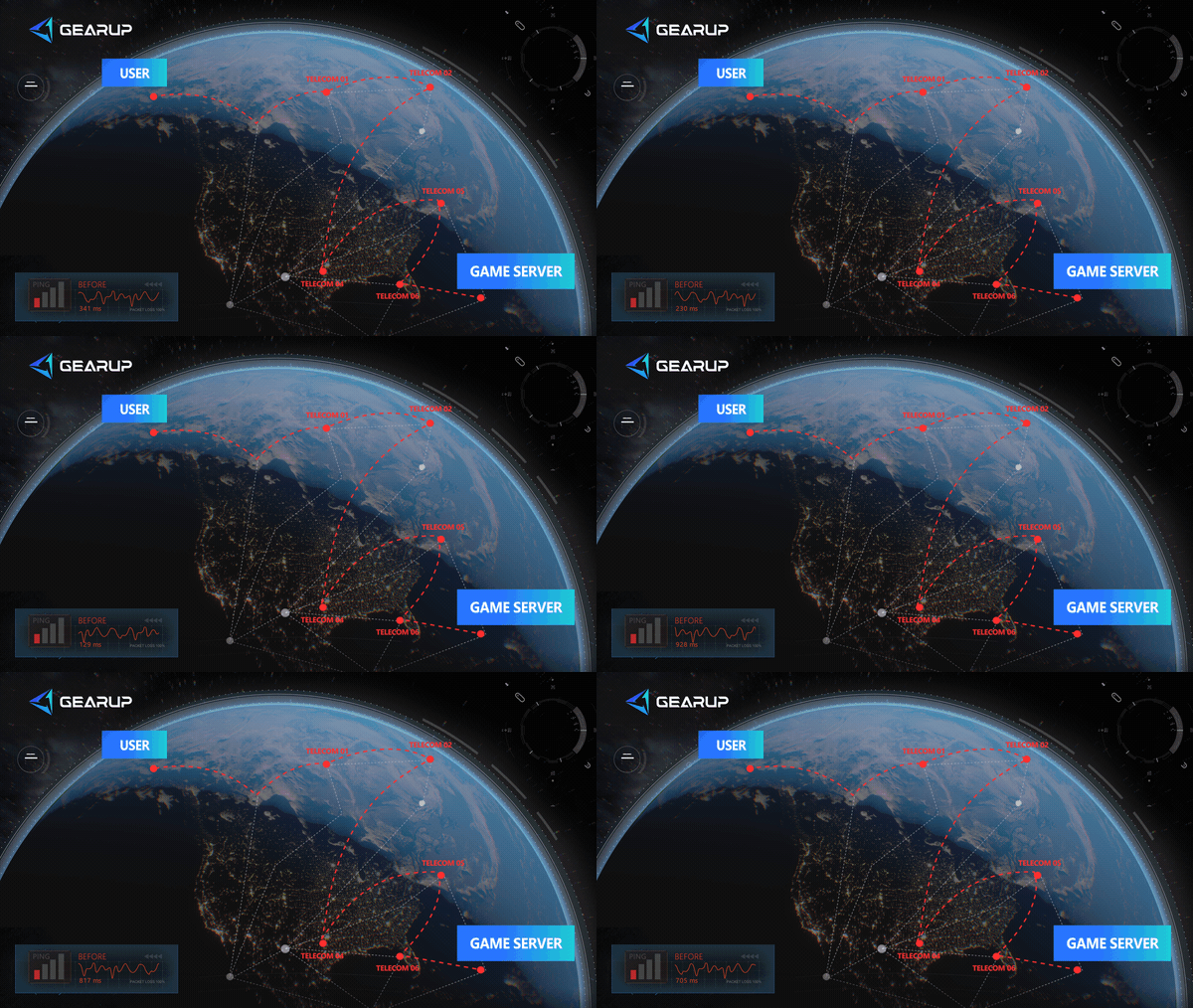
This is the part most guides don’t explain. Even with good Wi‑Fi and the correct server, your ISP might route your connection inefficiently. Your data can be sent through unnecessary overseas nodes before reaching the game server, adding extra delay and packet loss. Users cannot fix ISP routing manually. That’s why some players with worse internet speeds still have better ping than you — it’s about the route, not the speed.
GearUP Mobile Truly Reduces CrossFire Legends' Ping
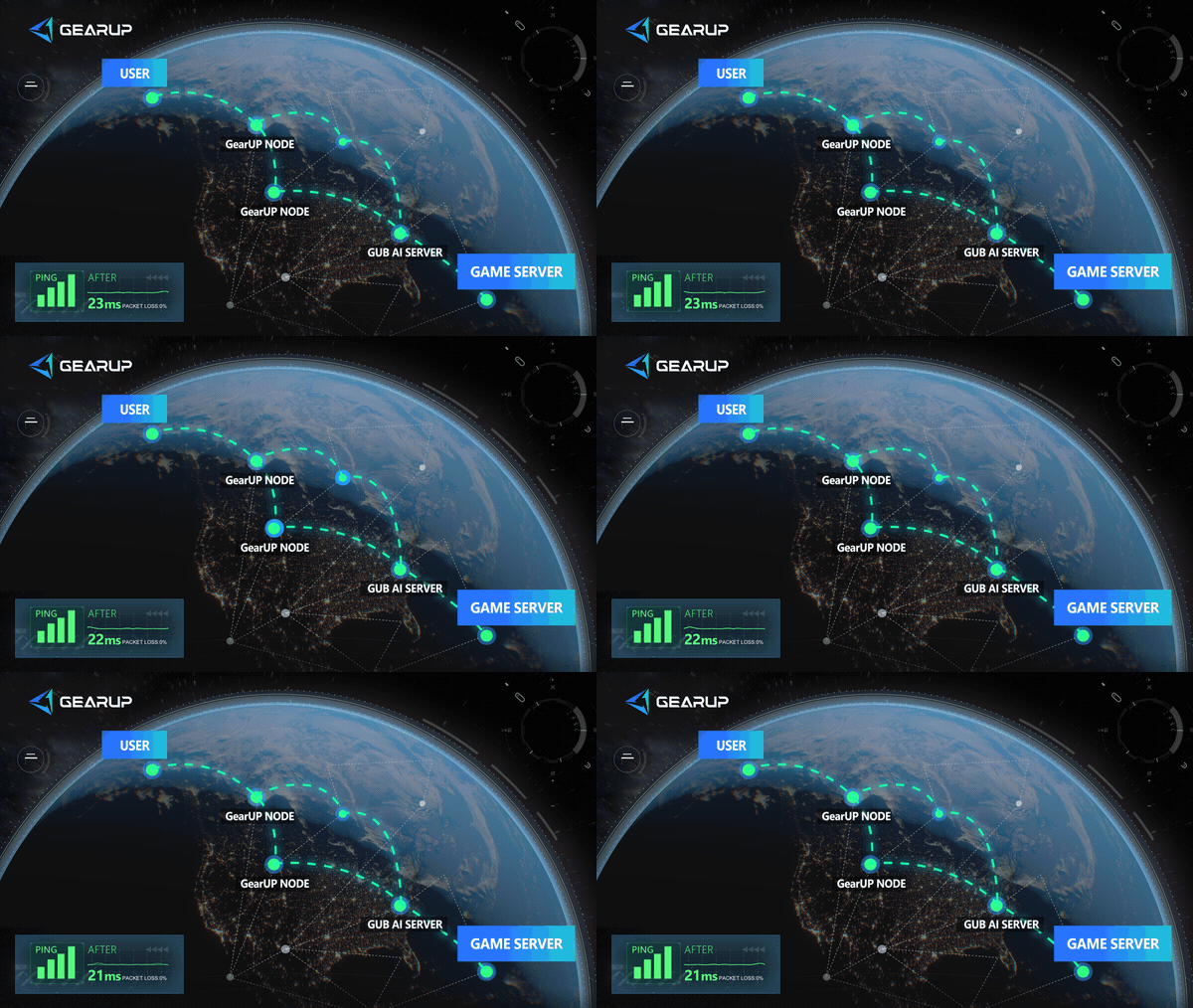
As mentioned above, most increases in ping are because you are connected to a poor or faulty node. To solve this problem you need the help of GearUP Mobile. It can automatically adjust your connection to the most suitable node and maintain stability, and through Dual‑Assurance technology it gives you a low‑lag gaming experience even during complex Wi‑Fi and mobile data switching.
GearUP Mobile advantages:
- Easy to use
- Supports a large number of games
- Significantly reduces ping
- Offers global service
You only need to scan this QR code or click here to go to the app store to download:
※New users can redeem this code for a 1-day free membership—limited quantity, available only until stocks last.
Recommended Ping for CrossFire Legends
- Excellent: <30 ms — ideal for perfect hit registration and competitive play.
- Very good: 30–60 ms — smooth gameplay with no practical disadvantage.
- Good: 60–100 ms — playable; slight reaction disadvantage vs lower-ping players.
- Marginal: 100–150 ms — noticeable lag; hit registration and movement feel degraded.
- Poor: >150 ms — gameplay is often frustrating; missed shots and rubber‑banding common.
Other Important Network Factors
- Jitter: keep jitter (variation in latency) low — ideally <20 ms. High jitter feels like inconsistent lag even if average ping looks OK.
- Packet loss: should be near 0% (under 1%); any significant loss causes hits to fail or inputs to drop.
- Stability matters more than a single low ping reading. A steady 70 ms is better than fluctuating 30–150 ms.
But you still need to judge based on your own situation; for example, if you are very far from the server, it may be difficult to get your ping below 30 ms.
About The Author
Ethan is one of GearUP's Technical Blog Editors, specializing in gaming network optimization and troubleshooting. With an in-depth understanding of GearUP's technologies, he creates clear, practical content that helps players identify the causes of network issues, understand how game acceleration works, and optimize their online gaming experience. By turning complex technical concepts into easy-to-follow guides, Ethan helps readers solve common connectivity problems and make better use of GearUP's features.
The End