Unable to Log In/Match: The Truth Behind League of Legends Server Connection Issues
 Last updated: 20 Jul, 2026
  7 min
7 minPreface
Champion select ends, the countdown disappears, and instead of loading onto the Rift, League of Legends sends you back to a connection message. Other players cannot even reach that point because the Riot Client times out first. “Unable to connect to server” sounds like one error, but it can happen during login, patching, game loading, or an attempted reconnect.
That difference matters. A server outage needs patience. A blocked client needs a local fix. A poor route needs a network solution. Work out which door is closed before changing everything at once.
Tip: LoL connection problems are most likely unrelated to the game files themselves, which means they are generally not caused by file errors, so don't rush to reinstall; you should focus more on network issues.
Find Where League Loses Connection
Regardless of the situation, checking Riot's server status should be your top priority; you don't need to perform pointless actions when the servers are down, as that will only waste your time:
- Visit the Riot Games Service Status page and select your correct region.
- Maintenance windows and live incidents are region-specific. A healthy NA page tells an EUW player nothing.
- If the status page shows an active incident, wait it out. No local fix will override a server-side outage.
If the status page is clear, fully exit the Riot Client from the system tray and restart your PC. This clears leftover Riot Client, League, and Vanguard processes that may be blocking a fresh connection.
Symptom-to-Layer Guide
Different symptoms point to different layers of the connection. Use the table below to decide where to focus.
| Symptom | Connection Stage | Likely Cause | Check First |
|---|---|---|---|
| Cannot sign in to the Riot Client | Authentication | Account credentials, Riot service status, DNS resolution, firewall rules blocking Riot Client | Riot status page, DNS settings, firewall exceptions for Riot Client |
| Client opens but cannot patch or download updates | Download / Update | Disk space, antivirus blocking file access, Riot update server status, corrupted local files | Available disk space, antivirus quarantine log, Riot Client repair tool |
| Stuck on "Logging in" indefinitely | Authentication | Riot Client process conflict, VPN interference, ISP-level blocking | Task Manager for stale processes, VPN status, alternate DNS |
| Game crashes during loading screen after champion select | Match connection | Vanguard service not running, overlay software injecting into the game process, corrupted game files | Vanguard status, overlay applications, Riot Client repair |
| Disconnected mid-game with "Attempting to reconnect" | Live session | Network instability, packet loss, ISP routing issues, Wi-Fi signal dropout | Ethernet connection test, ping to game server IP, traceroute |
| Repeated lag spikes or rubber-banding during matches | Live session | Background bandwidth consumption, Wi-Fi interference, incorrect server region, congested ISP routing | Background downloads, Task Manager network usage, server region setting |
| "Reconnect" button appears but never succeeds | Match connection | Firewall blocking the game executable, Vanguard blocking a required driver, VPN routing the connection through a blocked endpoint | Firewall rules for LeagueClient.exe and League of Legends.exe, Vanguard logs, VPN settings |
| Black screen after champion select with no loading bar | Match connection | GPU driver crash, overlay injection failure, game file corruption | GPU driver version, overlay software, Riot Client repair tool |
However, several of the issues mentioned above are relatively complex, so we will explain each one below. You can follow the steps to troubleshoot and resolve them.
💡A quick solution for fixing network connections: GearUP is worth considering.
First: Don't Rush to Reinstall: Check Local Issues
Before moving on, complete these quick checks:
- Reduce network traffic. Pause game downloads, cloud backups, livestreams, and other large uploads on your network.
- Test a wired connection. If League works over Ethernet but not Wi-Fi, troubleshoot your wireless connection instead of reinstalling the game.
- Restart your modem and router. Power them off for about 30 seconds, then turn the modem on first, followed by the router.
- Run the Riot Client as administrator. If you suspect a permission issue, launch the Riot Client as administrator. Avoid running only the League executable with elevated privileges.
Pay Special Attention to Riot Vanguard
Riot Vanguard is the essential security program required to launch League of Legends, but it is also the main cause of connection problems for many players. If it is blocked, corrupted, or unable to communicate with Windows, the game may fail to launch or connect properly.
Make sure Riot Vanguard, Riot Client, and League of Legends are allowed through Windows Firewall and any third-party antivirus. Check your security software's protection history for quarantined Riot files.
If you temporarily disable your antivirus to test for a conflict, re-enable it immediately afterward. The correct long-term solution is to add the Riot applications and Vanguard to your security software's allow list, not to leave protection turned off.
Second: Start Fixing Your Network Connection
Unlike the quick checks above, the network connection repairs referred to here mean ensuring your data transmission channels are open, which involves your local network address and the public network path:
Refresh Your Network Configuration
DNS translates Riot service names into IP addresses. If DNS lookups fail, the Riot Client may be unable to sign in, download updates, or connect to game services even though other websites still work.
Flush the DNS Cache
Open Command Prompt as administrator and run:
ipconfig /flushdns
Restart the Riot Client after the command completes.
Try a Different DNS Server
If the problem continues, test a reliable public DNS service instead of your current resolver. If you change your DNS settings, save the original configuration first so you can restore it later if needed.
Check the Hosts File
A modified hosts file can redirect or block Riot domains. This is most common on systems that have previously used network optimization tools, VPN software, or unofficial connection tweaks.
Only remove custom Riot-related entries if you added them yourself or Riot Support instructs you to do so.
Reset Windows Network Settings
If none of the previous steps help, use Windows Network Reset to restore the default network configuration. This reinstalls your network adapters, so you may need to reconnect to Wi-Fi networks or set up VPNs and other custom network settings again.
GearUP for Routing Node Optimization
If changing the DNS has no effect, it means those public DNS nodes are not precise. First restore them to their default or automatic state, then try enabling GearUP. It will assign suitable nodes to you from its own network of 7,500 nodes, which may be more effective than modifying DNS.

Note that after using GearUP you do not need to manually change any network settings. Its traffic identification and network path adjustments are automated and will connect more accurately to League of Legends servers worldwide without affecting other software's network access.
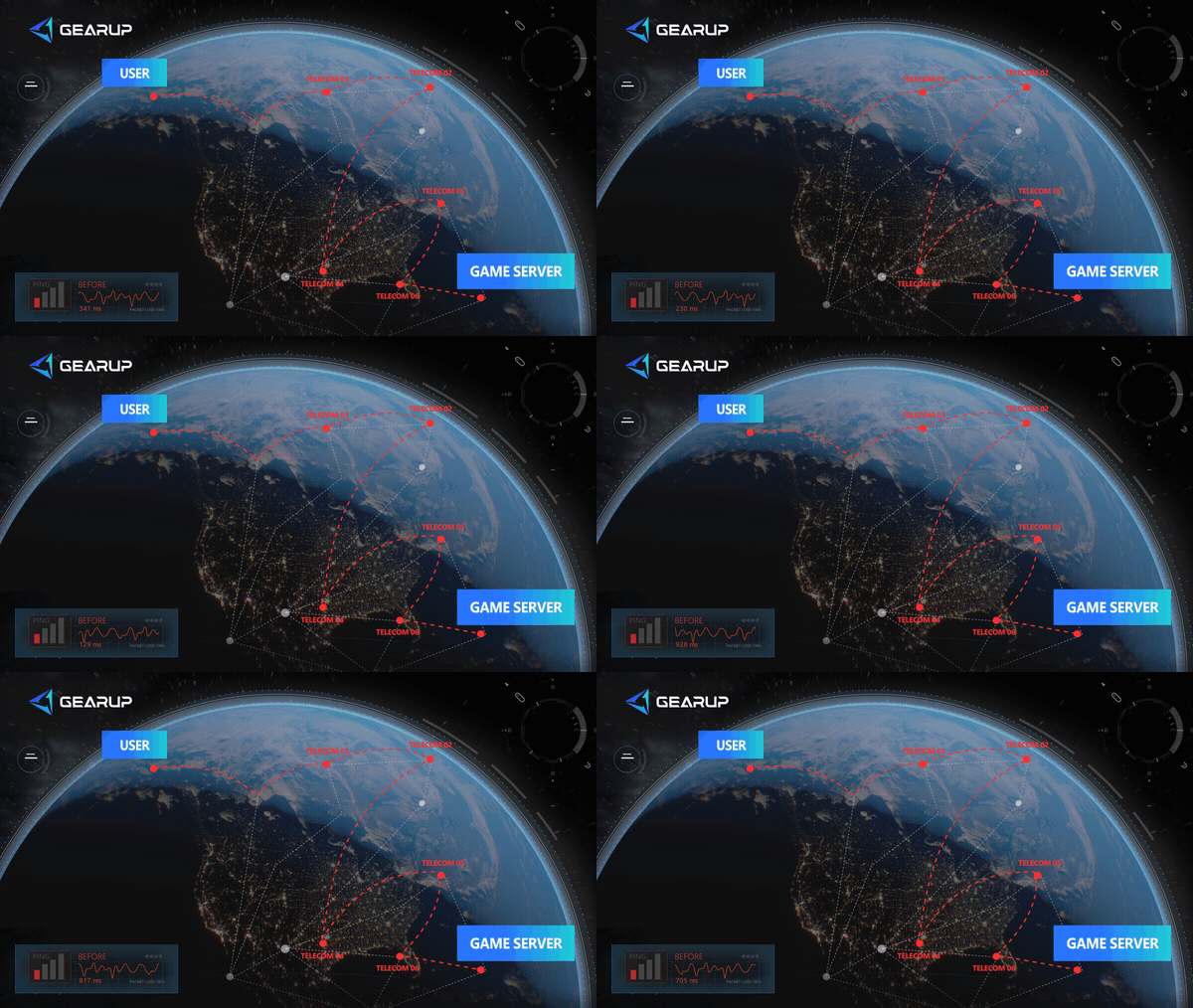
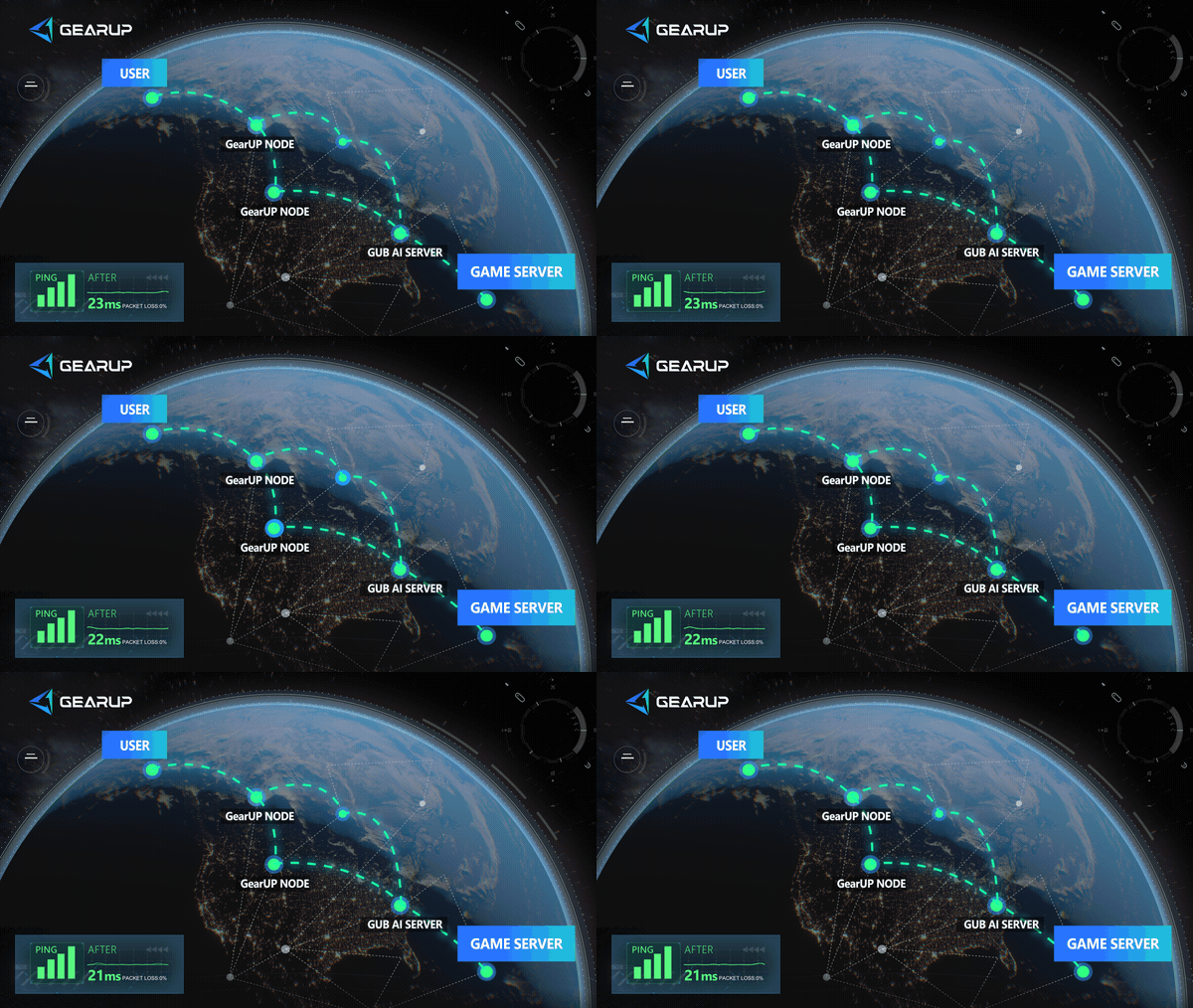
You only need three steps:
- Search for League of Legends.
- Select a server.
- Start boosting and launch the game.
What If League Still Cannot Connect?
Try the Riot Repair Tool before reinstalling the game. It can gather logs and help with common client and connection problems. If the error continues, attach those logs to a Riot Support ticket with the exact message and the stage where it appears.
State whether login fails, patching stops, champion select finishes, the loading screen freezes, or reconnecting loops. “League is down” does not give support much to work with.
Questions About LoL Connection Failures
Q1: Why can I browse the web but not connect to League?
Web browsing and League do not use the same destination or route. A regional Riot incident, firewall rule, DNS failure, or ISP path can affect League without taking the whole internet offline.
Q2: Will changing DNS lower my ping?
Usually not after a match connection is established. DNS mainly helps the client locate services. It may fix login or patching failures, but it is not a general latency upgrade.
Q3: Should I reinstall League immediately?
No. Check Riot status, restart the client and network, test Ethernet, inspect firewall access, and repair DNS first. Reinstallation is useful for damaged files, not for an outage or a bad route.
Return to the Rift
When League of Legends cannot connect to the server, follow the failure in order: Riot’s region, the client, the local network, then the route beyond your home. That approach is faster than changing random settings and keeps GearUP in the right role: one practical option when routing is actually the problem.
About The Author
Lucas Harrison is GearUP’s PC game expert and a veteran media professional with many years of experience. He is well versed in the various network issues that affect PC games and has extensive insights into solving them, having proposed numerous suggestions for optimizing GearUP’s PC version. He currently serves as GearUP’s Content Creation Lead, primarily responsible for writing GearUP’s PC network optimization guides, which aim to help players understand the problems they’re facing and provide practical, effective solutions through clear, easy-to-follow guidance.
The End