How to Fix Lag in The Division 2
 Last updated: 23 Mar, 2026
  6 min
6 minAs a The Division 2 player, no one wants to suddenly encounter lag and stuttering in the middle of an intense firefight — your precise aim seems to stop working at that moment, unable to threaten NPCs or other players. You might think this is caused by Ubisoft’s unstable servers, but in reality it often isn’t.
In this guide, we’ll take a detailed look at the causes of lag in The Division 2 and effective ways to resolve it, suitable for every player. I think you should take a look.

What Causes Lag in The Division 2?
The Division 2 is an always-online looter shooter that relies on constant communication between your client and Ubisoft's servers. When this connection is disrupted, players experience lag — delayed inputs, rubber-banding enemies, and unresponsive controls.
- Server-Side Performance Issues
- During peak hours, seasonal events, or new content launches, Ubisoft's servers can become overloaded, causing lag for everyone connected.
- Always-Online Architecture
- The Division 2 processes nearly everything server-side — enemy AI, loot drops, damage calculations, and player positioning. Even a slight delay in data transmission results in noticeable lag.
- ISP Routing Problems
- ISPs often route traffic through congested or distant network nodes, adding unnecessary latency. This is especially common for players in regions far from Ubisoft's data centers.
- Cross-Play and Cross-Region Matchmaking
- The matchmaking system can pair you with players from different regions, placing you on distant servers with higher ping.
- Background Applications Consuming Bandwidth
- Cloud sync services, streaming platforms, game launchers downloading updates, and Windows Update can silently consume bandwidth and cause lag spikes.
Why Is It Hard for Players to Fix Lag?
Lag in The Division 2 is rarely caused by a single factor. It’s usually the result of multiple factors working together, such as server performance, ISP routing, matchmaking mechanisms, and local network conditions. Players can’t control server capacity, choose which data center to connect to, or opt for an offline mode. This multi-layered dependence makes a truly lag-free experience nearly impossible, and it also makes it very difficult for players to reduce latency on their own—especially for those outside North America and Western Europe.
But does that mean there really are no ways to reduce lag? Not at all.
Reduce Latency in The Division 2 Using Network Optimization Tools
Fixing your network connection isn’t impossible, but you’ll need GearUP. This network optimization tool focuses on improving online game connections by intelligently analyzing in real time to adjust your routing nodes, thereby matching a more suitable network path and reducing ping in The Division 2. GearUP requires no network configuration from you; its more than 7,500 nodes can be freely combined and switched to ensure adequate connection stability for players in every region.
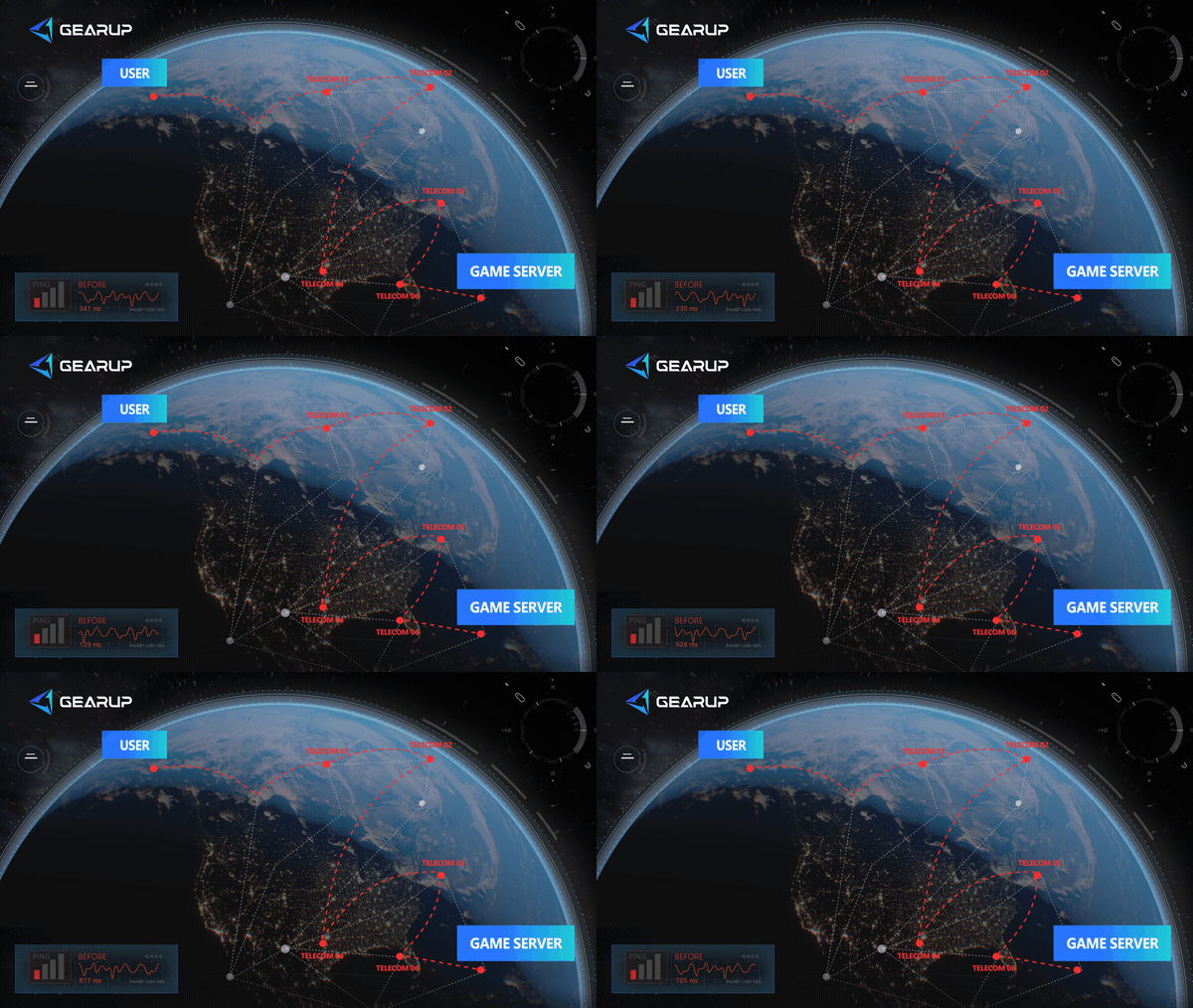
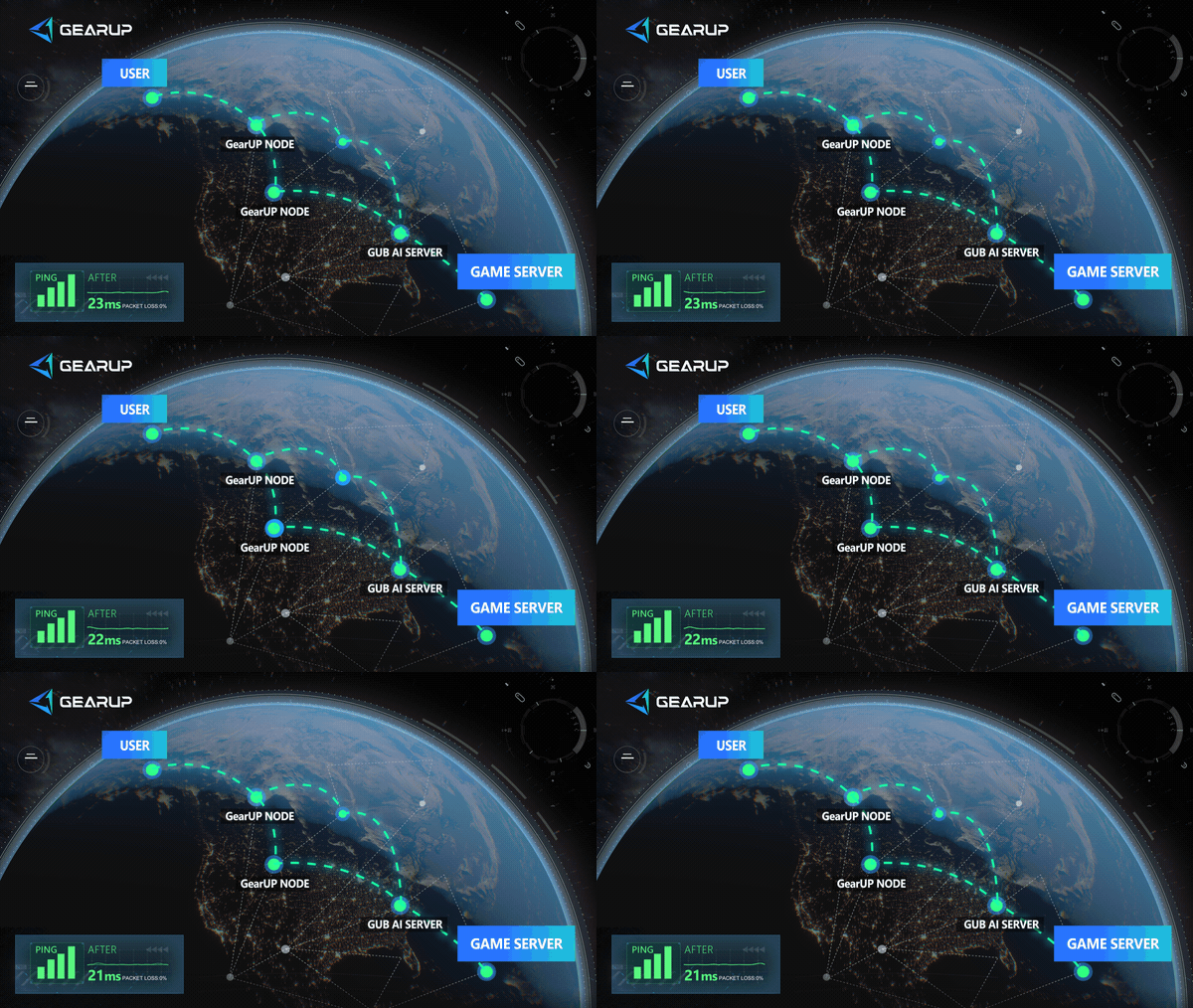
GearUP features proprietary adaptive intelligent routing and anti-packet-loss technologies, which are completely different from what traditional VPNs can achieve, and are therefore favored by many The Division players.

GearUP offers optimization solutions for all platforms. PC players can use the PC version directly:
- Search for The Division 2.
- Choose a server.
- Start the boost, then launch the game — GearUP will provide real-time network optimization; keep it running in the background.
Console players can choose the gaming router HYPEREV, so there’s no need to enable a PC—you can easily control network optimization for PlayStation and Xbox via the mobile app, and it can also be used as a WiFi extender:
Other Network Usage Issues
Additionally, you still need to pay attention to many network usage habits and details, which can reduce the likelihood that problems affecting your local network will cause increased latency. They include:
Use a Wired Connection
A wired Ethernet connection is always more stable than Wi-Fi. Wireless signals are prone to interference from walls, other devices, and network congestion, which causes ping spikes and packet loss. Connect your PC or console directly to your router with an Ethernet cable for the most consistent and lowest-latency connection possible.
Close Unnecessary Background Programs
Many applications silently consume bandwidth while you play. Before launching The Division 2, close any programs that may be using your network:
- Cloud sync services (OneDrive, Google Drive, Dropbox)
- Streaming platforms (YouTube, Spotify, Twitch)
- Game launchers downloading updates (Steam, Ubisoft Connect, Epic Games)
- Browser tabs with video or auto-refreshing content
Open Task Manager (Ctrl + Shift + Esc), sort by Network usage, and end any non-essential processes.
Restart Your Router
Over time, routers accumulate temporary data and routing errors that can increase latency. A simple restart clears these issues and re-establishes a fresh connection to your ISP.
- Unplug your router from the power source.
- Wait 30–60 seconds.
- Plug it back in and wait for all lights to stabilize.
- Reconnect your device and launch the game.
Doing this regularly — especially before long gaming sessions — can noticeably improve your connection quality.
What About Hardware Lag in The Division 2?
There’s another situation that, while not within the scope of this discussion on network lag, can sometimes produce a similar latency experience: hardware performance issues. Therefore, first make sure your device (especially your PC) meets The Division 2’s recommended requirements:
- Requires a 64-bit processor and operating system
- Operating system*: Originally released for Windows 7, the game can be played on Windows 10 and Windows 11
- Processor: AMD Ryzen 5 1500x, Intel Core i7-4790, or better (SSE 4.2 and AVX support required)
- Memory: 8 GB RAM
- Graphics card: AMD RX 480 (4 GB), NVIDIA GeForce GTX 970 (4 GB with Shader Model 6.0+), or better
- DirectX version: 12
- Storage space: 77 GB of available space required
Why are these recommended requirements? Because they let your game achieve higher smoothness and visual quality, and provide some performance headroom to reduce stuttering.
If your specs do not meet the requirements, we recommend prioritizing upgrades to:
- Graphics card
- Memory
- Hard drive
The Division 2 Latency FAQ
Q1: Can I use ping to determine latency?
Yes. The ping value indicates your latency level. We recommend keeping ping below 60 ms for the best experience.
Q2: Can network latency cause frame drops?
In cases of severe network latency, your game’s frame rate may exhibit slight stuttering, which can make it hard to distinguish between network latency and performance-related lag.
Q3: Why is there still latency even though ping looks normal?
You may be experiencing network jitter or packet loss. These instantaneous issues might not be reflected in the ping value but can still cause perceived latency in The Division 2.
Q4: Will increasing bandwidth reduce latency?
Only marginally. Latency is mainly caused by connection stability, not raw bandwidth. Because the amount of data exchanged during gameplay is relatively small, high download/upload speeds do not greatly affect latency.
Final Thoughts
Latency in The Division 2 plagues many players, especially those who enjoy tackling high-difficulty missions or the Dark Zone, but you don’t need to be troubled by complex network configurations. GearUP offers a highly intelligent network path optimization solution that enables every player to easily reduce latency. If you’re looking for a solution, why not try it now?
About The Author
Lucas Harrison is GearUP’s PC game expert and a veteran media professional with many years of experience. He is well versed in the various network issues that affect PC games and has extensive insights into solving them, having proposed numerous suggestions for optimizing GearUP’s PC version. He currently serves as GearUP’s Content Creation Lead, primarily responsible for writing GearUP’s PC network optimization guides, which aim to help players understand the problems they’re facing and provide practical, effective solutions through clear, easy-to-follow guidance.
The End