For Honor Lag: How to Fix It
 Last updated: 23 Jun, 2026
  6 min
6 minFor Honor relies entirely on tight, split-second melee timing. Every block, dodge, and counter has to land within milliseconds, so even small latency drops or frame stutters completely break the whole combat flow. Whether you’re grinding ranked solo duels or joining chaotic 4v4 team war matches, constant lag and stuttering turn fun gaming sessions into a frustrating mess. The good news is the lag problems in For Honor are easy to troubleshoot and fix.

Two Types of Lag in For Honor
What we commonly refer to as lag actually falls into two types: most players experience lag caused by a poor network connection, and in some cases we may also face performance lag (stuttering):
| Network Lag | Performance Lag | |
|---|---|---|
| Cause | Internet connection issues | Hardware or software limitations |
| Symptoms | Delayed attacks, rubberbanding, sudden disconnections, Connection Failure errors | Frame drops, screen freezes, stuttering animations, slow texture loading |
| Common causes | Unstable ISP routing causing high ping and packet loss to Ubisoft servers | PC or console hardware not meeting the game's requirements |
| Cross-region matchmaking with long distance server links | Background apps consuming CPU, GPU, or memory resources | |
| Router overload, outdated DNS, or firewall blocking game ports | Outdated graphics drivers or incorrect in-game settings | |
| Sudden network fluctuations triggering Connection Failure | CPU or GPU overheating and throttling performance |
Quick check: If the game feels fine offline but laggy online, it's network lag. If it stutters in all modes, it's a performance problem.
Use GearUP to Fix For Honor Network Latency
The difficulty in fixing network lag lies in complex settings, which can overwhelm many players. Now you can switch to a simpler and truly effective solution: GearUP.
It is not a VPN but a tool focused on optimizing game traffic. By accurately identifying For Honor traffic, it assigns nodes based on the server you connect to, creates shortcuts for data transmission, and dynamically switches when sudden network issues occur, thereby consistently reducing latency. This is GearUP’s proprietary multi-line technology.
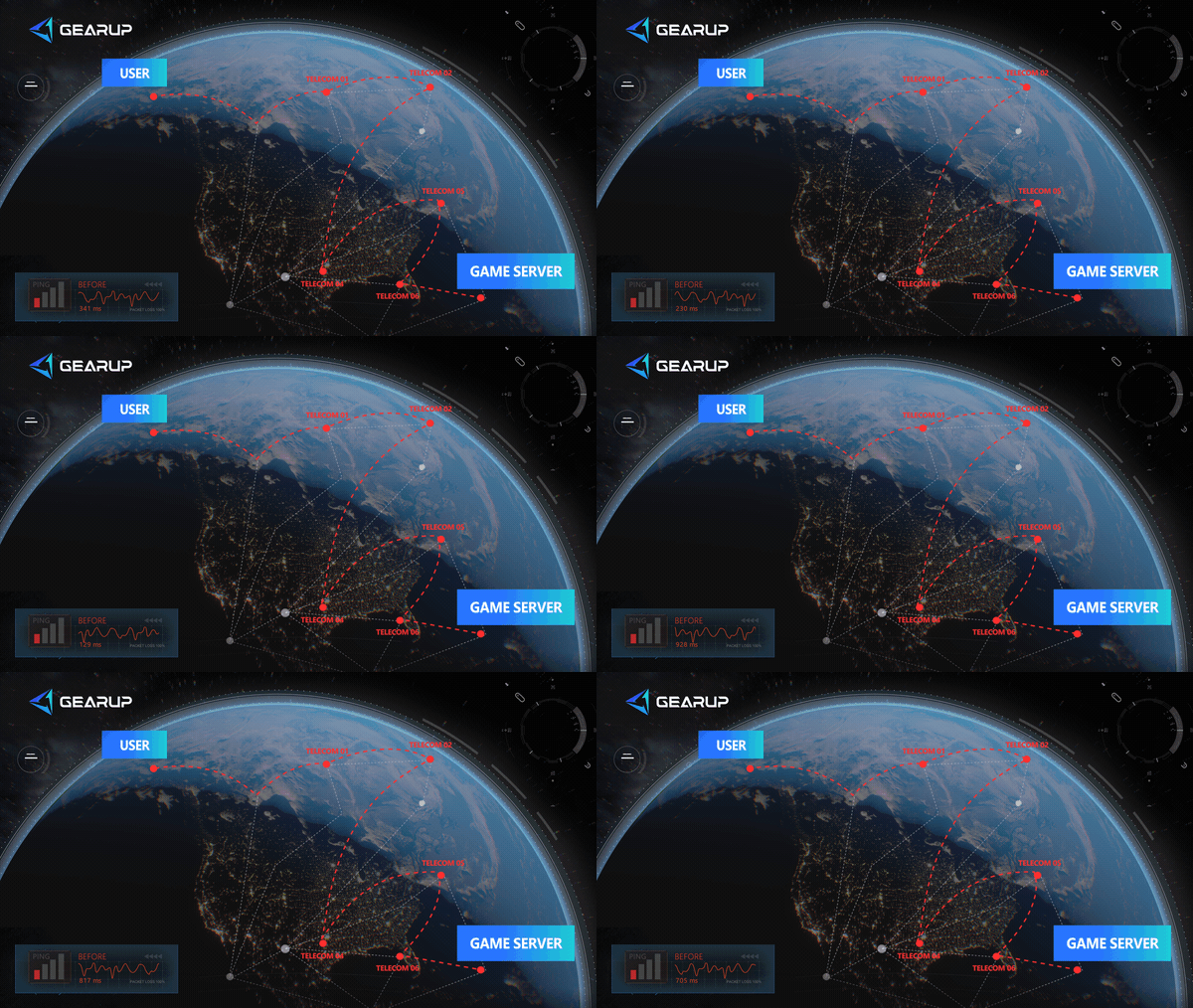
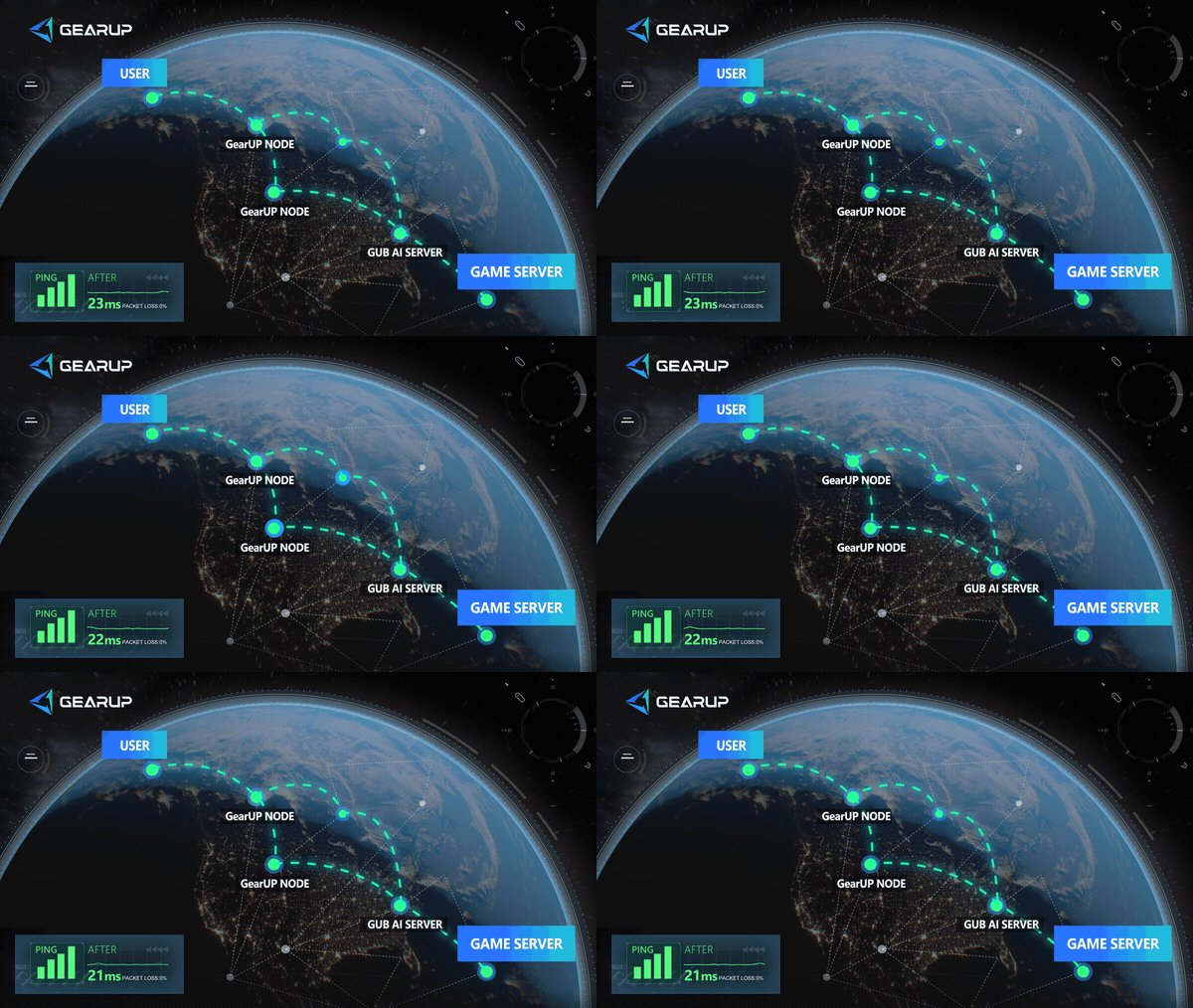

GearUP is considered simple because it requires no network configuration from you. That avoids configuration errors and is why the tool has become increasingly popular among players. How to use it:
- Search for For Honor.
- Choose the server you want to connect to; try to pick a closer server for more stability and lower latency.
- Start the boost. Ubisoft Connect will also be optimized. Then just launch the game and keep GearUP running in the background to maintain the effect.
Some players prefer to play For Honor on consoles. Although the GearUP PC version can also support this, it requires keeping the PC running. If you don't want that hassle, consider installing the GearUP router plugin. It already supports multiple router brands and the OpenWrt system, and can be controlled via a mobile app to enjoy the full GearUP functionality:
GearUP plugin discussion group: https://t.me/+2L3_m7xt6ToyNWQ0
More Tips for Reducing Network Latency
- Close bandwidth-heavy apps. Cloud sync tools, streaming platforms, and browser tabs playing video all compete with For Honor for bandwidth. On PC, open Task Manager, sort by network usage, and shut down the top consumers. Also check other devices in your home, as someone streaming or downloading on another device can also cause lag.
- Choose the nearest server. For Honor lets you select your server region in the game settings. Always pick the one closest to your physical location to keep ping as low as possible. Connecting to a distant server adds travel time to every packet and makes combat feel unresponsive.
- Use a wired connection. Wi-Fi is unreliable for reaction-heavy games like For Honor due to walls, distance, and interference. Plug an Ethernet cable directly from your router into your PC or console. If your router is too far away, a powerline adapter is still more stable than Wi-Fi.
Resolving For Honor Stuttering Issues
Before you can fix performance stuttering, first confirm whether your device meets the game's requirements. This mainly refers to PCs, since you can't make any adjustments on consoles. For Honor provides minimum and recommended specifications, but in most games we advise referring only to the recommended specs, because the minimum specs will almost fully occupy your device's performance, and in reality you cannot run only For Honor alone:
| Minimum | Recommended | |
|---|---|---|
| OS | Windows 10 (64-bit) | Windows 10, Windows 11 (64-bit) |
| CPU | Intel Core i3-4150 / AMD FX-4300 or equivalent | Intel Core i5-7500 / AMD Ryzen 5 1400 or equivalent |
| RAM | 4 GB | 8 GB |
| GPU | NVIDIA GeForce GTX950 / GTX1050 (2 GB VRAM) / AMD Radeon R9 270 / R9 370 / RX460 (2 GB VRAM) | NVIDIA GeForce GTX1060 (3 GB+ VRAM) / AMD Radeon RX580 (4 GB+ VRAM) |
| DirectX | Version 9.0c | Version 9.0c |
| Network | Broadband Internet connection | Broadband Internet connection |
| Storage | 90 GB available space | 90 GB available space |
If you've ruled out configuration issues, consider whether your device's performance is being consumed by other processes or whether it's not being fully utilized:
Check Your Device's Performance Usage
If your hardware is overloaded, the game will stutter regardless of your internet connection.
- Press Ctrl + Shift + Esc to open Task Manager
- Click the CPU, GPU, and Memory columns to see what's using the most resources
- Close any heavy background apps like browsers, recording software, or streaming tools
- If CPU or GPU usage is consistently near 100%, lower your in-game graphics settings
Disable Power Saving Mode
Power saving mode limits your hardware's performance to save energy, which directly causes frame drops and stuttering during gameplay.
- Open Settings and go to System, then Power & Battery (or Power & Sleep)
- Click Power Mode and switch from Best Power Efficiency to Best Performance or Balanced
- If you're on a laptop, make sure it's plugged into power while playing
FAQ About For Honor Lag
Q1: Why do I keep getting Connection Failure in For Honor even with stable internet?
A: Stable daily internet does not guarantee smooth game connectivity. Cross region routing congestion and packet loss are invisible network issues.
Q2: Does high network speed guarantee low latency?
A: Not necessarily. Network speed refers to the amount of data transmitted and received per unit of time, while For Honor’s real-time data volume is not large. Latency depends more on the network stability during the actual game connection.
Q3: Why must I use GearUP to reduce latency?
A: Because neither the nodes provided by ISPs nor adjustments to the router can perform route optimization specifically for For Honor servers, but GearUP can.
Q4: Will using GearUP get me banned by Ubisoft?
A: No. GearUP does not violate Ubisoft’s game rules, nor does it modify game data or access users’ private information. It only changes the traffic path and is completely safe.
Conclusion
To this day, latency issues in For Honor still trouble some players. Some blame Ubisoft’s servers, but that is not the case. In most instances the problem lies with the route you take to connect to the servers, and GearUP is the key to quickly optimizing that. Why not give it a try now?
About The Author
Lucas Harrison is GearUP’s PC game expert and a veteran media professional with many years of experience. He is well versed in the various network issues that affect PC games and has extensive insights into solving them, having proposed numerous suggestions for optimizing GearUP’s PC version. He currently serves as GearUP’s Content Creation Lead, primarily responsible for writing GearUP’s PC network optimization guides, which aim to help players understand the problems they’re facing and provide practical, effective solutions through clear, easy-to-follow guidance.
The End