How to Fix Console Lag in Fallout 76
 Last updated: 22 Feb, 2026
  5 min
5 minFallout 76 is fundamentally different from traditional single-player RPGs in the franchise. Built around a persistent online world, every event, combat encounter, and shared activity depends on real-time server communication. Whether you’re playing on PlayStation or Xbox consoles, the experience is only as smooth as your connection to the game’s servers.
But, for console players this kind of lag seems more unpredictable and harder to resolve, since most of it stems from network failures—so let's use this guide to learn how to fix lag on the console version of Fallout 76.
What Causes Console Lag in Fallout 76?
- Cross-region server routing — Being matched to distant data centers increases round‑trip time and the chance of packet loss.
- Home network instability (Wi‑Fi issues) — Wireless interference, weak signal through walls, or channel congestion causes packet loss and jitter.
- ISP congestion and poor peering — Overloaded backbone links or bad inter‑ISP routes (especially at peak hours) produce unpredictable latency spikes.
- Server‑side load and instance scaling — High player counts, large public events, or overloaded game servers raise server processing time and reduce update responsiveness.
Why console lag usually isn’t a hardware performance problem:
Consoles are fixed, well‑optimized hardware with game builds tuned to run reliably on that platform, so frame drops or slow rendering are less often the issue. Most perceived “lag” in online multiplayer comes from network problems—high latency, packet loss, jitter, routing inefficiencies, NAT restrictions, or overloaded game servers—which affect the timing and reliability of data between your console and the game host rather than the console’s CPU/GPU.
How to Fix Fallout 76 Lag on Xbox and PlayStation?
Use HYPEREV to Optimize Node Connections
The difficulty in resolving console network latency lies in the closed nature of their systems. Whether PlayStation or Xbox, their network configuration options are relatively simple. Whether the issue is a local network connection or a failure of public network routing nodes, players find it hard to fix manually. That’s why you need a gaming router like HYPEREV — it’s plug‑and‑play, simplifying all the network configuration steps and allowing players to adjust Fallout 76 server connection nodes worldwide with one click, optimizing based on the player’s real‑time network conditions and changes.
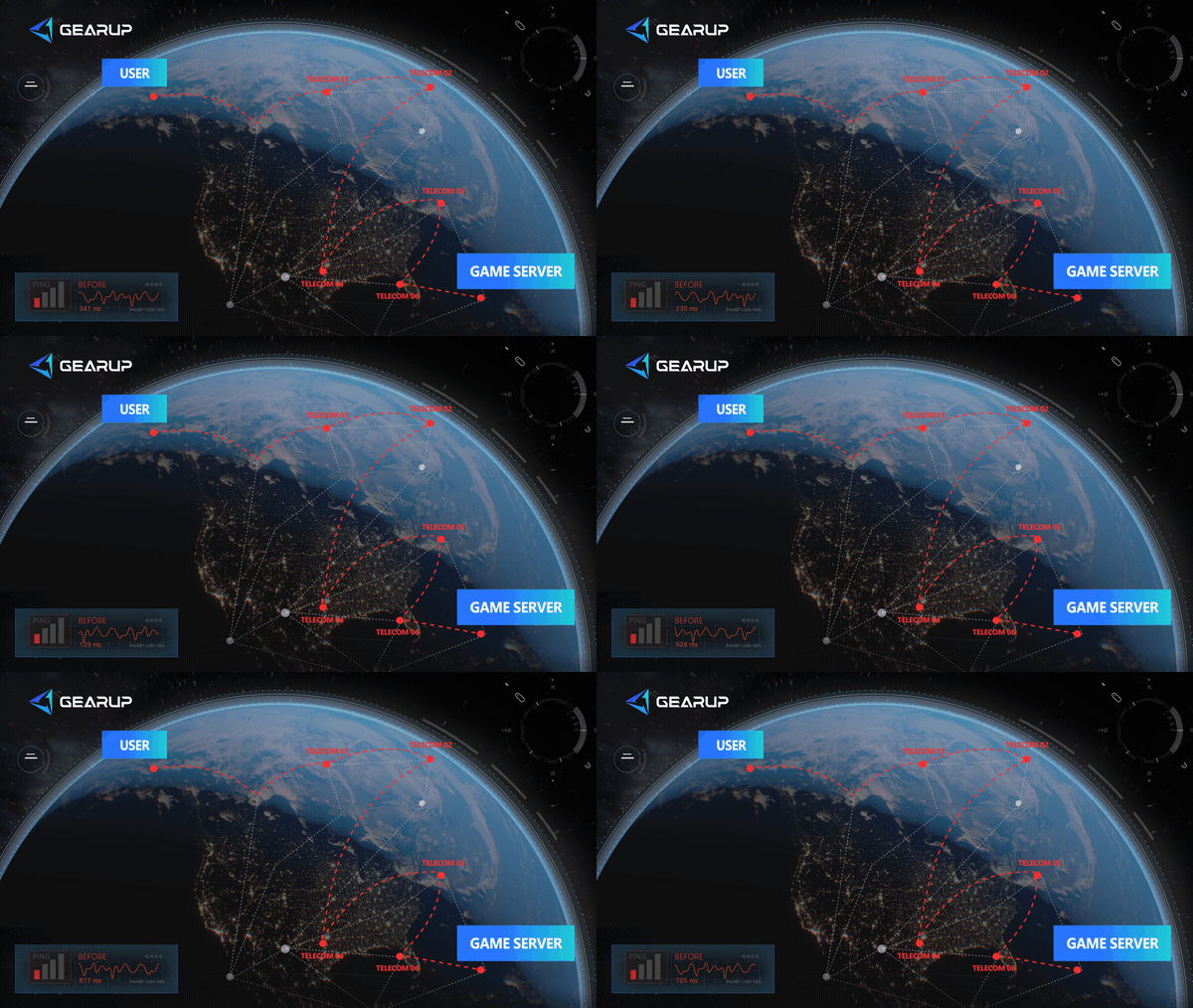
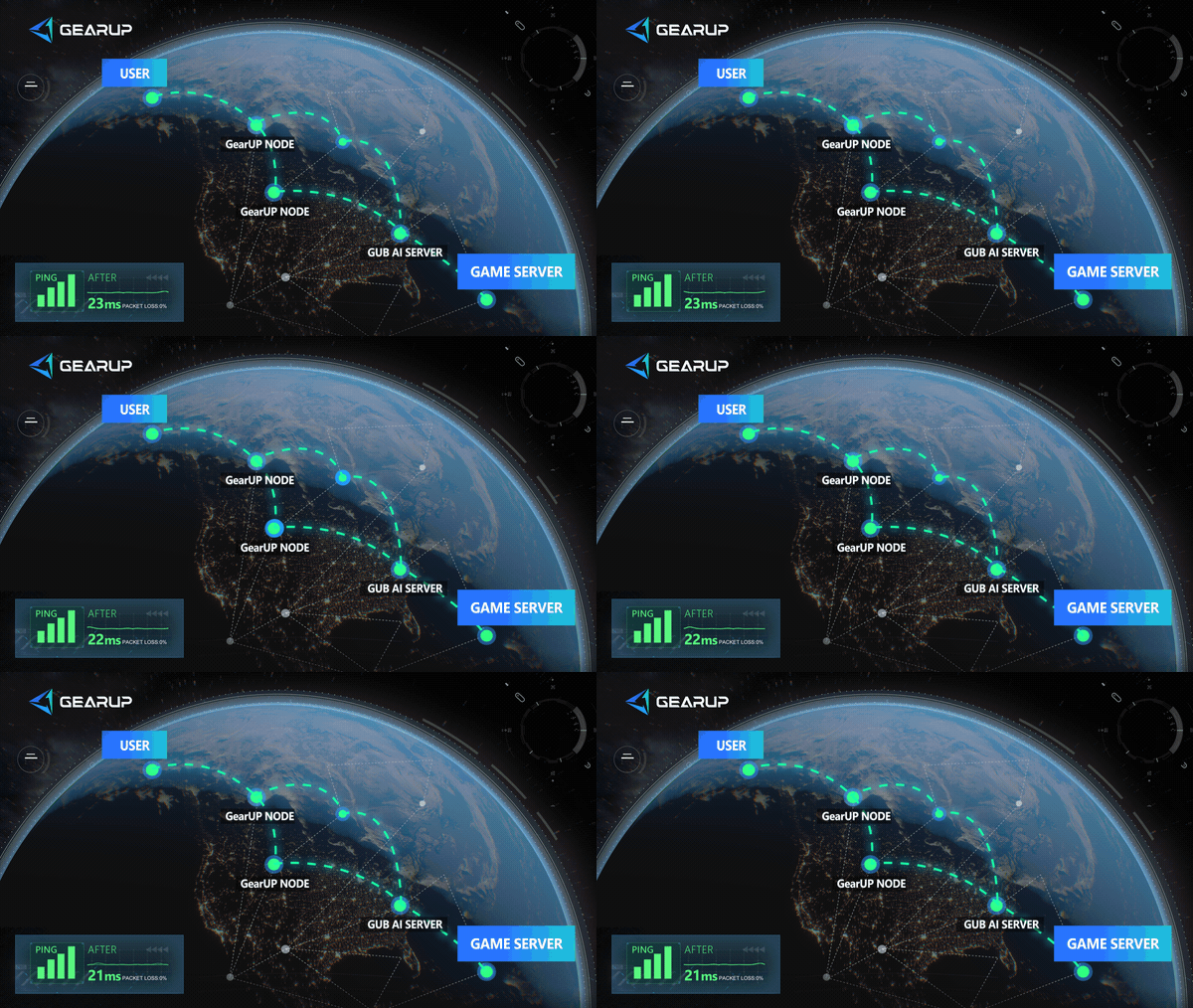
HYPEREV’s proprietary adaptive intelligent routing and electronic‑fence technologies can achieve precise matching, avoid interference from network jitter, and deliver game‑level optimization that traditional esports routers cannot. You can learn more about it in the video below:
Use a Wired Ethernet Connection and Update/Restart Network Gear
Connect your Xbox/PlayStation directly to the router or a gigabit switch with an Ethernet cable; update router and console firmware; power‑cycle modem → router → console; try a different router port or a known good cable. If direct cabling isn’t possible, test a powerline or a wired MoCA adapter (performance varies by home wiring).
Pause Background Downloads and Reduce Other Devices
- On your console, open the Downloads/Updates screen and pause any active downloads or installs.
- Close other apps/games running in the background.
- Ask people on your home network to stop high‑bandwidth activities (4K streaming, big downloads, cloud backups) while you play.
- Restart your modem/router and the console (power off, wait 10–20 seconds, power on).
- If lag is still bad, try playing at a different time (avoid evenings/weekends when many users are online).
Signs of Fallout 76 Latency on Consoles
Sometimes we can’t tell if we’re actually experiencing latency or some other problem — you can tell the difference by the following signs:
- Rubber‑banding / teleporting players or NPCs — others jump around instead of moving smoothly.
- Your shots or hits don’t register (you hit someone but no damage) or doors/menus take a long time to respond.
- Input delay — your actions (shoot, open door, reload) feel delayed compared with the animation.
- Voice chat or party chat is delayed, choppy, or cuts out.
- Frequent disconnects, long loading into sessions, or getting kicked back to main menu.
- Game world seems “out of sync” (items/objects appear/disappear or move suddenly).
Sometimes even minor stuttering and frame drops can be caused by network latency; they are not a device performance issue.
Questions about Fallout 76 Console Latency
Q1. What’s the difference between HYPEREV and an ordinary router?
Ordinary routers (including gaming routers) can only optimize local traffic transmission priority; they cannot achieve public network transmission optimization or precise, game-server-level optimization, whereas HYPEREV is specifically built for that part. You can learn about the differences between ordinary routers and HYEREV through this article.
Q2. Does all Fallout 76 console latency come from the network?
It basically comes from the network, because PlayStation and Xbox devices are standardized and the game is specifically optimized, so performance optimization issues rarely occur.
Q3. Is it safe for HYPEREV to reduce latency?
Completely safe. HYPEREV adjusts the nodes on the route you use to connect to the Fallout 76 servers; it does not modify game data and carries no security risk.
Final Thoughts
Console lag in Fallout 76 is usually a routing and stability issue rather than a hardware limitation. Increasing bandwidth alone rarely solves high ping or packet loss. By optimizing data paths with HYPEREV and strengthening your local network setup, you can significantly improve responsiveness and stability. A smoother connection ultimately restores the immersive experience the wasteland is meant to deliver.
About The Author
Olivia Clarke is a Mobile Gaming Content Editor at GearUP, focusing on competitive mobile games and the networking challenges that affect online gameplay. She specializes in creating practical, easy-to-follow content for titles like PUBG Mobile and Brawl Stars, helping players understand the causes of lag, unstable connections, and high latency. By combining real gameplay scenarios with straightforward networking advice, Olivia makes technical topics more accessible to mobile gamers.
The End