Apex Legends Lag — Causes and Fixes
 Last updated: 11 Feb, 2026
  5 min
5 minYou're a veteran Apex Legends player, so you’ve more or less been troubled by lag — it almost invisibly ruins your matches. You think you hit the enemy, but they take no damage; you think you've pulled off a slick movement, and the next second you’re down. Nobody wants to be plagued by this issue, so you should read this guide. We’ll walk you through how to fix Apex Legends lag step by step.
Manifestations and Causes of Apex Legends Lag
Network lag
- Manifestations: high and inconsistent ping (large, fluctuating ms); packet loss that makes hits not register or causes delayed damage; rubberbanding or players/objects teleporting.
- Main causes: poor routing or ISP congestion between you and the game server; weak Wi‑Fi signal or wireless interference; wrong server region, VPN, or extra network hops introducing latency and packet loss.
Performance lag
- Manifestations: low or fluctuating FPS and frequent frame drops; short stutters or momentary freezes during gameplay; input lag—delayed shooting, aiming, ability use, or animation desync.
- Main causes: CPU/GPU overloaded by high graphics settings or background processes; thermal throttling when the device overheats; outdated drivers, OS issues, or conflicts with overlays/third‑party tools.
Advantages of Using GearUP to Solve Apex Legends Network Lag
Network lag is hard to fix because the failure often lies in places players can't control — routing nodes. Even if you switch ISPs, they usually won’t provide the optimal nodes. You need a network optimization tool like GearUP to make adjustments.
Don't worry: GearUP uses an automated, minimalist approach — you don't need to configure the network or constantly monitor jitter. It automatically uses adaptive intelligent routing and anti-packet-loss technology to stabilize the server connection and reduce Apex Legends ping.
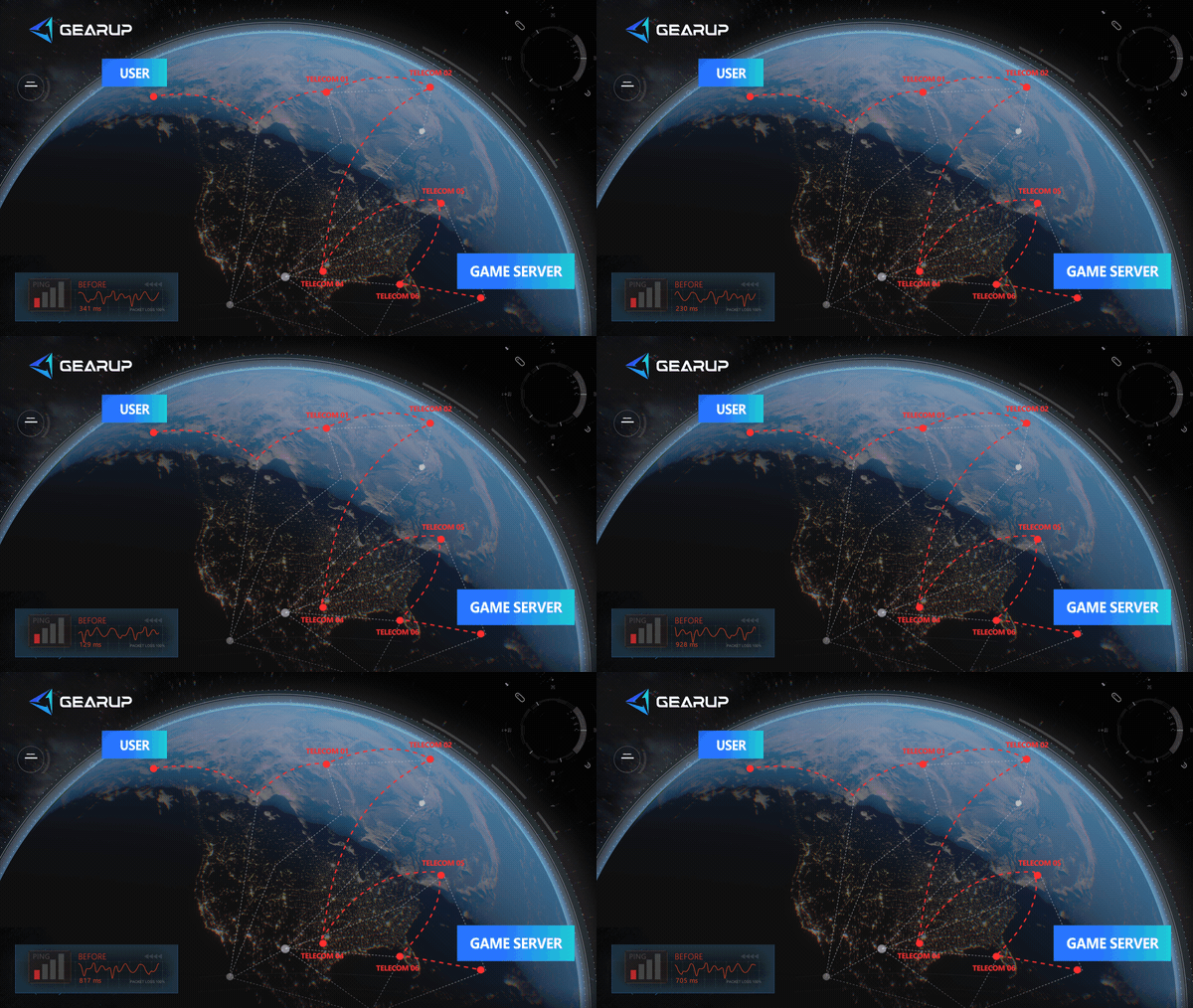
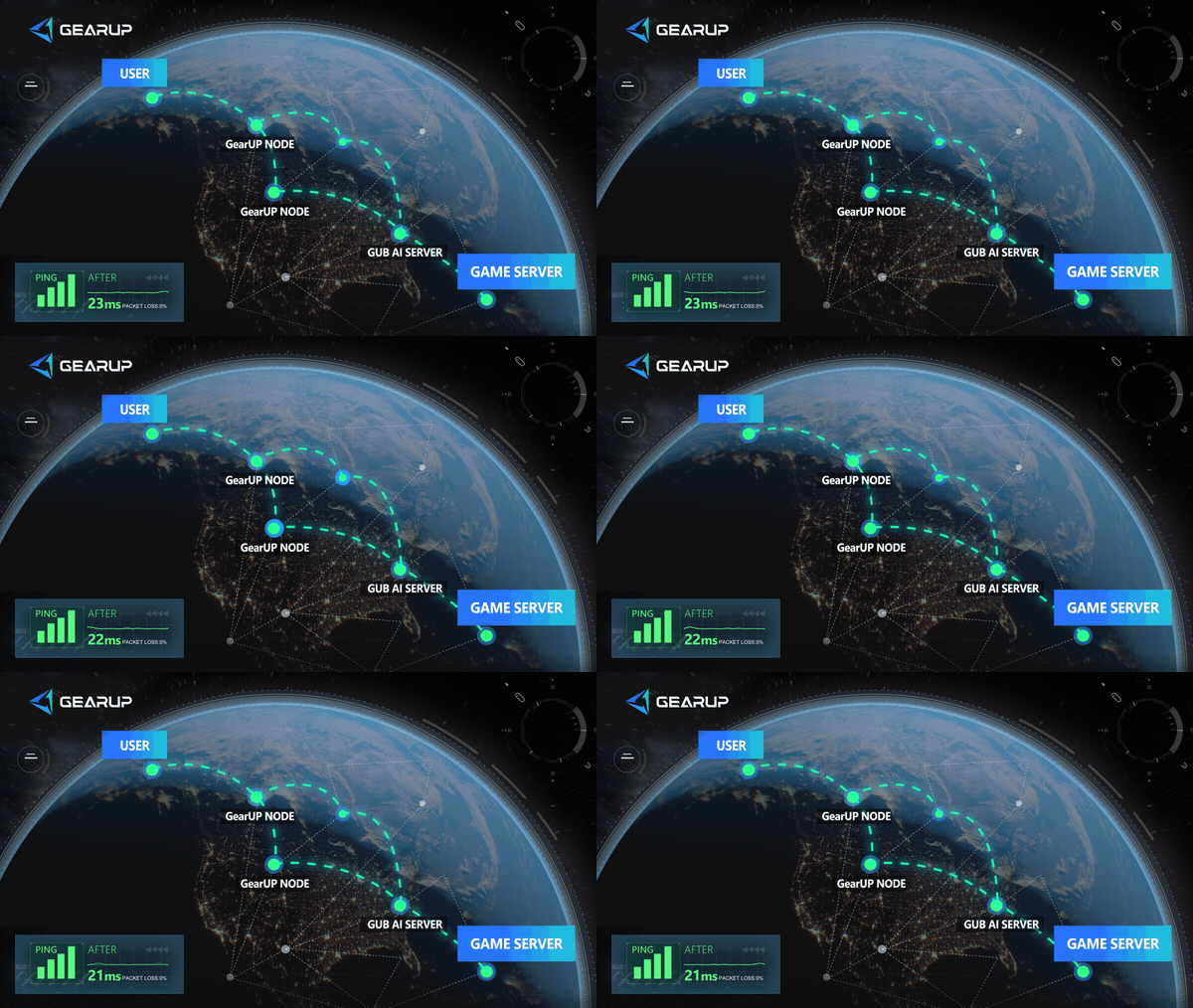

Note: GearUP is not a VPN. It focuses solely on optimizing connections to game nodes, so it can achieve more precise, stable, and effective results. With just a few clicks, you can quickly say goodbye to latency:
- Search for Apex Legends.
- Then select the server you want to connect to. You can use GearUP to connect to Apex Legends servers worldwide, but closer servers will give you lower ping.
- Click "boost", then launch the game. You can also view real-time network status through GearUP. Remember not to close GearUP, otherwise your optimization will stop working.
If you’re a console player, GearUP also offers HYPEREV, which is more suitable for consoles. HYPEREV is a gaming router built with the same GearUP technology and is controllable via a mobile app. With it, you won’t need to run a PC while playing Apex Legends on console.
Don't Let Device Performance Create Lag
Even after many years, Apex Legends still has relatively high performance requirements, but many players overlook this.
First, check whether your device is hitting a bottleneck. Use the recommended specs below as a reference:
- Requires a 64-bit processor and operating system
- OS: 64-bit Windows 10
- CPU: Ryzen 5 CPU or Equivalent
- Memory: 8 GB RAM
- GPU: AMD Radeon™ R9 290, NVIDIA GeForce® GTX 970
- DirectX: Version 12
- Network: Broadband internet connection
- Storage: 75 GB available space required
Consider whether your device can fully deliver its performance:
Often your PC or console may be placed somewhere with poor ventilation or blocked airflow. At best this causes throttling and frame drops; at worst the device will trigger overheat protection, kick you out of the game, or reboot. Many game errors you encounter may come from this reason.
Also, don’t enable unverified mods/plugins. They may offer conveniences but their security and stability are unverified and they are often a cause of stuttering.
Additional Notes
- Close unnecessary background programs. You don’t need to download, watch streams, or use streaming services while playing an Apex Legends match — don’t let them consume your network and device resources. Keep useful network-optimizing software like GearUP.
- Check whether your network is stable. Wired connection is best. Wi‑Fi is convenient but easily blocked by objects and more prone to packet loss. If you must use Wi‑Fi, stay as close to the router as possible.
- If you still experience stuttering, lower your graphics settings appropriately, especially shadows and lighting.
Apex Legends lag quick Q&A
Q1. My device is good — why do I still see slight frame drops?
A: That slight frame drop may not be a performance issue but network latency. It can produce a mild frame-drop-like feeling that’s easy to confuse. You can use GearUP to quickly optimize.
Q2. Why did latency increase after switching servers?
A: Data transmission time is nearly constant, so if you switch to a more distant Apex Legends server, the data takes longer to travel and that results in more noticeable lag.
Q3. Is GearUP's network optimization method safe?
A: The answer is obvious: yes. GearUP does not modify game data or affect game balance. It adjusts data transmission paths and improves connection stability — this is fully compliant with network rules and game requirements.
Q4. Can a VPN reduce Apex Legends lag?
A: Unfortunately, VPNs don’t have a clear positive effect. VPNs mainly provide IP masking and data encryption; their nodes are not optimized for every Apex Legends server, and your route may become longer, increasing latency.
Summary
Apex Legends lag faults are often sudden and can directly interrupt your match, so it’s best to prevent them from the start. GearUP is an excellent tool for handling network issues easily. At the same time, don’t neglect your device’s operating condition — don’t let frame drops and stuttering further ruin your experience.
About The Author
Ethan is one of GearUP's Technical Blog Editors, specializing in gaming network optimization and troubleshooting. With an in-depth understanding of GearUP's technologies, he creates clear, practical content that helps players identify the causes of network issues, understand how game acceleration works, and optimize their online gaming experience. By turning complex technical concepts into easy-to-follow guides, Ethan helps readers solve common connectivity problems and make better use of GearUP's features.
The End