Can WiFi Make Your Game Lag
 Last updated: 29 Dec, 2025
  8 min
8 minLet’s admit it—WiFi has transformed our lives, including how we game. Many gamers prefer WiFi because it’s easy to set up, avoids messy cables, and accommodates houses where running additional ethernet cables is just impossible. Plus, modern WiFi technology promises faster speeds and stronger signals than ever before. For casual gaming or watching streams, WiFi seems like the perfect choice.
However, when it comes to competitive gaming, WiFi might not always be your best friend. Why? Because even the strongest WiFi signals can have their limitations when it comes to stability, latency, and interference.
Why WiFi Can Cause Game Lag?
Lag—that dreaded delay between your input and the game’s response—is often the result of issues with network connectivity. When using WiFi for gaming, several potential downsides can come into play:
- Interference: WiFi relies on radio waves, which can be disrupted by walls, furniture, and even other electronic devices like microwaves and TVs. This interference can create instability, resulting in dropped packets or inconsistent gameplay.
- Higher Latency: Unlike a wired connection, WiFi introduces a bit more delay due to the nature of wireless signal transmission. This delay, called latency, can make games feel unresponsive and slow.
- Shared Bandwidth: If multiple devices are using the same WiFi network, they compete for bandwidth. This can lead to slower speeds and a frustrating experience when someone streams a 4K movie while you’re trying to secure that clutch kill.
- Distance and Signal Strength: WiFi performance depends on how far you are from the router. The farther you are, the weaker the signal, which increases latency and instability.
Even under ideal conditions, WiFi can sometimes falter, especially when you’re gaming in fast-paced genres like first-person shooters, battle royale, or MOBAs, where milliseconds matter.
Symptoms of WiFi Lag in Gaming
How do you know if your game lag is caused by WiFi? Here are a few tell-tale signs:
- Rubberbanding: Your character teleports backward or moves erratically.
- High Ping: In-game latency readings spike, often exceeding 100-200ms.
- Packet Loss: Actions don’t register in the game, such as shooting or moving, causing disconnects or missed inputs.
- Frame Freezes: The game freezes intermittently, creating a stuttering experience.
If any of these sound familiar, your WiFi setup might be to blame.
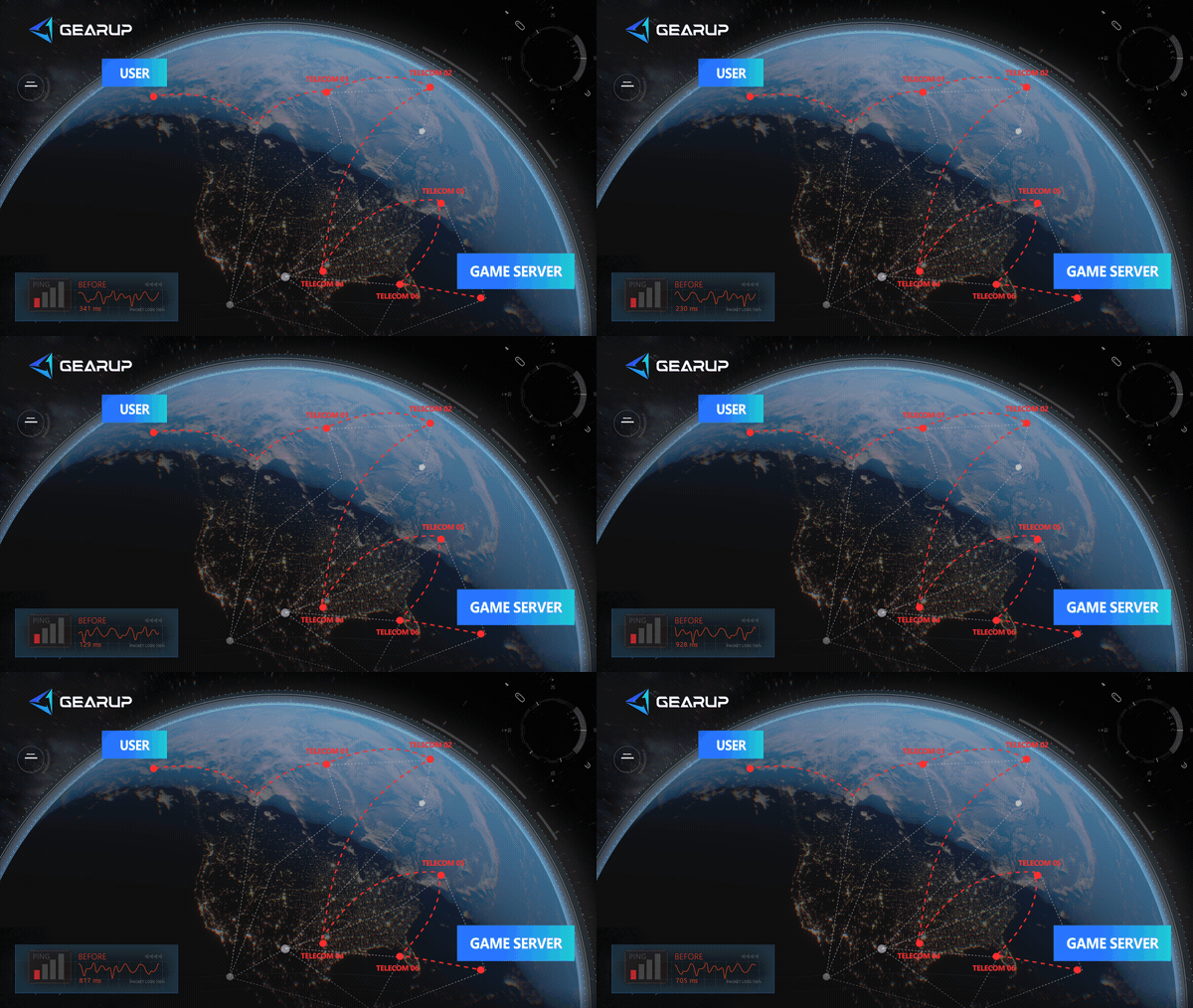
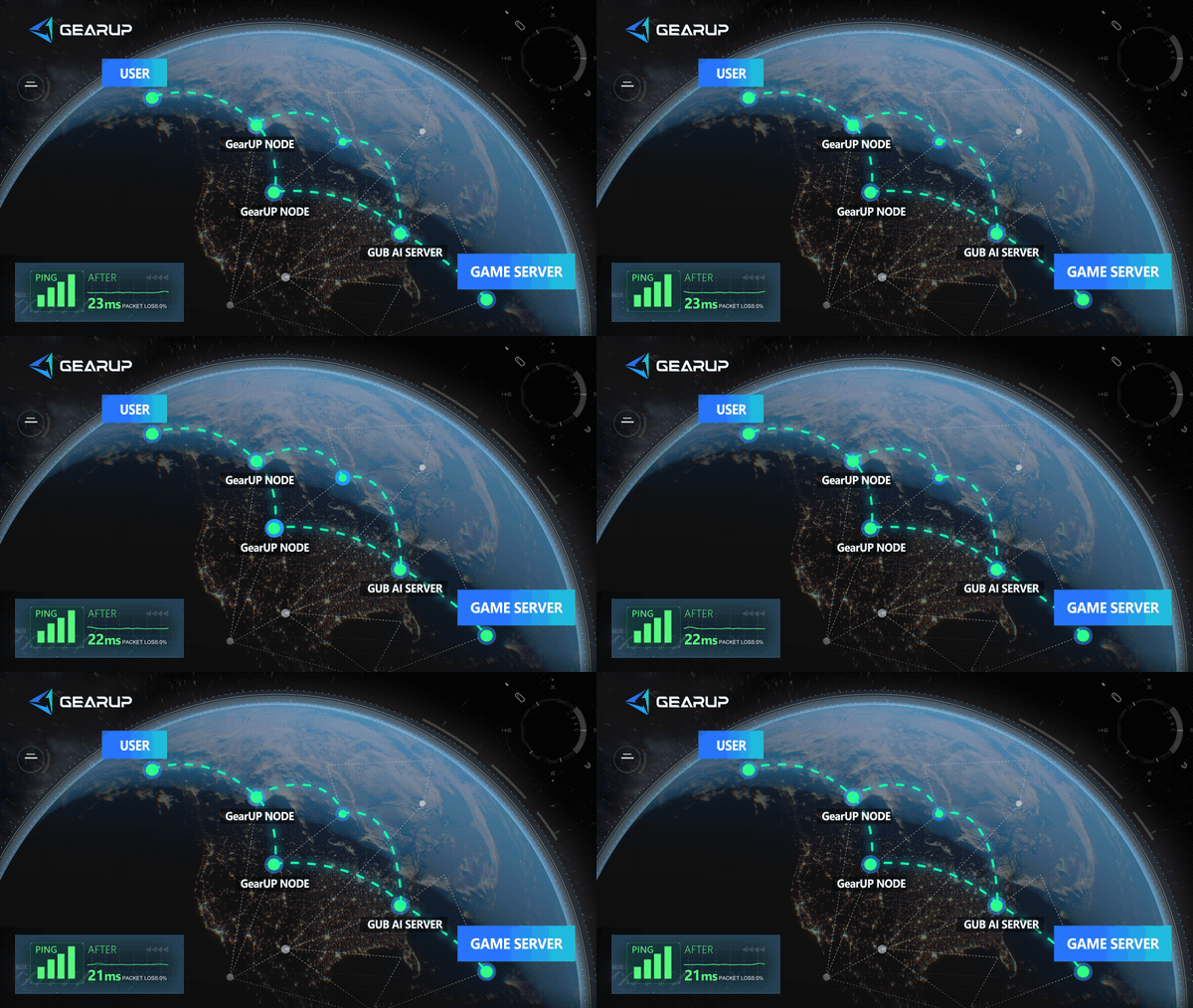
How to Reduce Game Lag Caused by Wi‑Fi?
Optimize Your WiFi Environment
As much as possible, keep your WiFi router from being in a location with obstructions. Although modern routers all provide multi‑band signals, regardless of which type, they will be affected by obstructions to varying degrees, so avoid this situation as much as possible.
During gameplay, reduce the number of devices connected to the WiFi, or try to ensure they do not heavily use network bandwidth at the same time; reducing contention can make your WiFi connection more stable.
Choosing the Right Frequency Band
Most routers today provide signal connections on multiple frequency bands; the more high‑end the router, the more bands it may offer. However, a band with a larger number is not necessarily better — each has its own use cases, so connect according to your actual situation:
| Band | Range & penetration | Throughput & channel widths | Interference & congestion | Best use cases | Device compatibility |
|---|---|---|---|---|---|
| 2.4 GHz | Longest range, best at penetrating walls/obstacles | Lower peak throughput; typical channel widths 20–40 MHz | High interference (microwaves, Bluetooth, many legacy APs), fewer non-overlapping channels | IoT devices, smart home sensors, long-distance coverage in older buildings | Very high — nearly all Wi‑Fi devices support 2.4 GHz |
| 5 GHz | Medium range, worse wall penetration than 2.4 GHz | Higher throughput; supports 20/40/80/160 MHz channels (up to 160 MHz on many devices) | Less crowded than 2.4 GHz but some DFS/airspace restrictions; more non-overlapping channels | Gaming, HD streaming, video calls, general high-bandwidth uses | High — most modern devices support 5 GHz |
| 6 GHz (Wi‑Fi 6E / Wi‑Fi 7 use) | Shorter range than 5 GHz, poor penetration through walls | Very high throughput; wide contiguous channels (commonly up to 160 MHz, Wi‑Fi 7 may use 320 MHz) | Much less legacy congestion (newer band); regulatory availability varies by country; may include DFS rules | Low-latency gaming, high-bandwidth streaming, dense environments with many APs | Growing — requires Wi‑Fi 6E/7 capable client and AP |
| 60 GHz (802.11ad/ay, "WiGig") | Very short range, almost no wall penetration, best line-of-sight | Extremely high throughput (multi-Gbps) with very wide channels | Minimal interference (different ecosystem), limited practical range | In-room ultra-high-speed links: wireless VR, wireless docking, short-range data sync | Low — only specialized devices and adapters support it |
Adjust Wi‑Fi Priority
If your router supports it, set your gaming device’s data priority to the highest level, or enable the router’s “Game Mode.” This ensures your game traffic is transmitted with priority, helping to reduce latency.
You can also assign different devices to different frequency bands — for example, connect ordinary electronics/appliances to 2.4 GHz and connect gaming devices to 5 GHz — preserving the “cleanliness” of the band used by your gaming device. Alternatively, add a Wi‑Fi extender and have less important devices connect to it for centralized management. This is like classifying your network connections: it helps regulate data flow and prevents devices from interfering with each other.
Use Network Optimization Tools
If you’ve tried the above measures and still experience lag and high ping, the problem may not be with your home Wi‑Fi but with the public network. In that case you can try HYPEREV, a router focused on optimizing game network connections.
HYPEREV can optimize your game connection nodes and performs precise optimizations based on different games and different servers. These nodes are the relay points for your data transmission; by default ISPs do not provide the best nodes, and players find it difficult to intervene manually, so a tool like HYPEREV is needed. Its intelligent multi‑path technology will automatically match routes and guard against sudden jitter, switching paths as necessary to maintain a stable connection from start to finish. This process does not require any network configuration on your part — HYPEREV is plug‑and‑play and can be optimized with one tap using a mobile app.
At the same time, HYPEREV is also an excellent Wi‑Fi extender, offering both 2.4GHz and 5GHz bands, and can fully serve as your Wi‑Fi management tool. If you’re interested, the video below can help you learn more about it; of course, you can also click the button to visit the store:
Differences Between Wi‑Fi Types
Common routers on the market include Wi‑Fi 5, Wi‑Fi 6, and Wi‑Fi 7. Their differences are as follows — choose the one that best fits your needs:
| Feature | Wi‑Fi 5 (802.11ac) | Wi‑Fi 6 (802.11ax) | Wi‑Fi 7 (802.11be) |
|---|---|---|---|
| Release era | Mid‑2010s | Late‑2010s – early‑2020s | 2023 – present |
| Theoretical max speed | Up to ~3.5 Gbps | Up to ~9.6 Gbps | Up to ~40–46 Gbps |
| Typical real‑world home speed | ~50–600 Mbps | ~200 Mbps–2 Gbps | Several hundred Mbps – multi‑Gbps (needs latest clients) |
| Best for | Basic gaming, streaming, few devices | Most gamers: competitive play, many devices, stable streams | Pro/gigabit gamers, 4K/8K streaming, future‑proof setups |
| Many‑device performance | OK for small households; slows when busy | Much better — handles many devices concurrently (OFDMA, improved MU‑MIMO) | Excellent — even higher concurrency and efficiency |
| Latency / gaming | Acceptable; can spike when network is crowded | Lower and more stable latency under load | Potentially lowest latency with Multi‑Link options |
| Key technologies | MU‑MIMO (downlink), 80/160 MHz, 256‑QAM | OFDMA, MU‑MIMO (up/down), 1024‑QAM, TWT | MLO (Multi‑Link), 320 MHz channels, 4096‑QAM |
| Range & reliability | Good (especially 2.4 GHz) | Similar range but better efficiency in crowded environments | Similar; best with modern mesh and antennas |
| Cost & compatibility | Cheapest, widely supported | Mainstream price, broad device support now | More expensive, ecosystem still growing |
| Why choose | Cheaper but older; more likely to struggle as devices increase | Best balance for most players: big improvement over Wi‑Fi 5 in multi‑device handling and latency; widely supported and affordable compared to Wi‑Fi 7 | Highest performance but costly and needs new client devices; overkill |
FAQ about Gaming WiFi
Q1: Is a wired connection always better than WiFi?
Not necessarily, but in the vast majority of cases a wired connection is more stable because it is less affected by external factors — more stable and with fewer packet losses.
Q2: Does WiFi 7 have lower latency than WiFi 6?
Theoretically yes, but currently WiFi 7 compatibility is not that good, so in actual experience it may not outperform WiFi 6.
Q3: Which should I choose, 2.4 GHz or 5 GHz?
It depends on whether there are obstacles between you and the router. 2.4 GHz penetrates better, while 5 GHz is faster.
Q4: Can placing multiple routers at home strengthen the WiFi signal?
Multiple routers networked together can make your WiFi coverage more even and reduce stuttering caused by being far from a router, but they will not add up your speed because you are still using the same network.
Final Words
Simply put, WiFi does make your gaming network connection more convenient, but it also has drawbacks such as unstable signals and a higher likelihood of lag. To improve this issue, besides maintaining a good WiFi environment, choosing the right channel, and managing connected devices, you can also optimize connection nodes using a dedicated gaming router like HYPEREV. These methods can all help you have a better experience when gaming over WiFi.
About The Author
Ethan is one of GearUP's Technical Blog Editors, specializing in gaming network optimization and troubleshooting. With an in-depth understanding of GearUP's technologies, he creates clear, practical content that helps players identify the causes of network issues, understand how game acceleration works, and optimize their online gaming experience. By turning complex technical concepts into easy-to-follow guides, Ethan helps readers solve common connectivity problems and make better use of GearUP's features.
The End